


Changelog
July 1, 2026
.svg)
What if the real reason your project timeline slips is not your tech stack, team size, or sprint speed, but the quality of your requirements?
Many engineering leaders improve CI/CD pipelines, refine standups, and invest in better tools. But projects still get delayed. Deadlines still move. Developers may use AI for much of their work, but they can automate only a small part of it because of vague requirements. That is where delivery speed gets lost.
SDLC requirements build the foundation for everything that follows. If you get them wrong, no process or engineering effort can fully protect the timeline.
Requirement analysis is not just another step in the process. It is one of the most important parts of your SDLC workflow, yet teams often overlook it.
The cost is simple:
Fixing a requirement issue during development costs more than fixing it during analysis. Fixing the same issue in production costs even more
When teams rush or skip SDLC requirements gathering, the problems spread quickly.
AI is changing the way you handle requirements in SDLC. It does not replace human decisions, but it removes confusion and manual work that slow teams down.
Automated Requirements Elicitation
AI-powered tools can pull requirements from emails, meeting notes, and documents automatically. This helps you capture important details that teams often miss.
Intelligent Document Analysis
AI can read complex requirement documents, find gaps, highlight conflicting points, and connect related requirements. This saves your team hours of manual work.
Enhanced Traceability and Impact Analysis
AI links each requirement to design elements, test cases, and implementation tasks. When one requirement changes, you can instantly see what it affects. This removes the guesswork.
Predictive Analytics and Risk Management
AI studies past project data to spot patterns that caused delays or failures before. This helps your team identify risks early and act before issues grow.
Real Time Collaboration and Feedback
AI-assisted platforms help business, product, and engineering teams stay aligned. Feedback moves faster, and approval cycles become shorter.
Continuous Learning and Improvement
AI improves with every project. It builds shared knowledge that stays with your team over time. How much smoother your projects can run when valuable knowledge keeps growing.
Knowing the risks helps, but following the right practices helps you avoid them.
Even experienced teams can make mistakes during SDLC requirements analysis, and these issues often lead to delays and confusion later in the project.
1. Insufficient Stakeholder Engagement
When teams leave out even one important stakeholder, they create gaps in the requirements. These gaps often lead to missed expectations and costly changes later.
To avoid this, identify all key stakeholders early and include every important perspective before finalizing requirements.
2. Ambiguous Language
Unclear requirements create confusion for everyone involved. For example, saying “the system should be fast” does not explain what “fast” actually means.
Without clear and measurable criteria, each person may interpret the requirement differently. This leads to inconsistent implementation and unnecessary rework.
3. Skipping Validation
Many teams assume everyone understands the requirements from the start, but this often causes issues during development. Without regular validation, misunderstandings remain hidden until they become expensive problems.
Adding validation checkpoints early helps confirm alignment and keeps the project on track.
4. Poor Documentation
When teams store requirements across emails, shared folders, and individual notes, information gets lost quickly. This creates confusion and weakens team alignment. Keeping documentation complete, organized, and easy to access helps everyone stay on the same page.
Think about how much smoother your process becomes when your whole team works from one clear source.
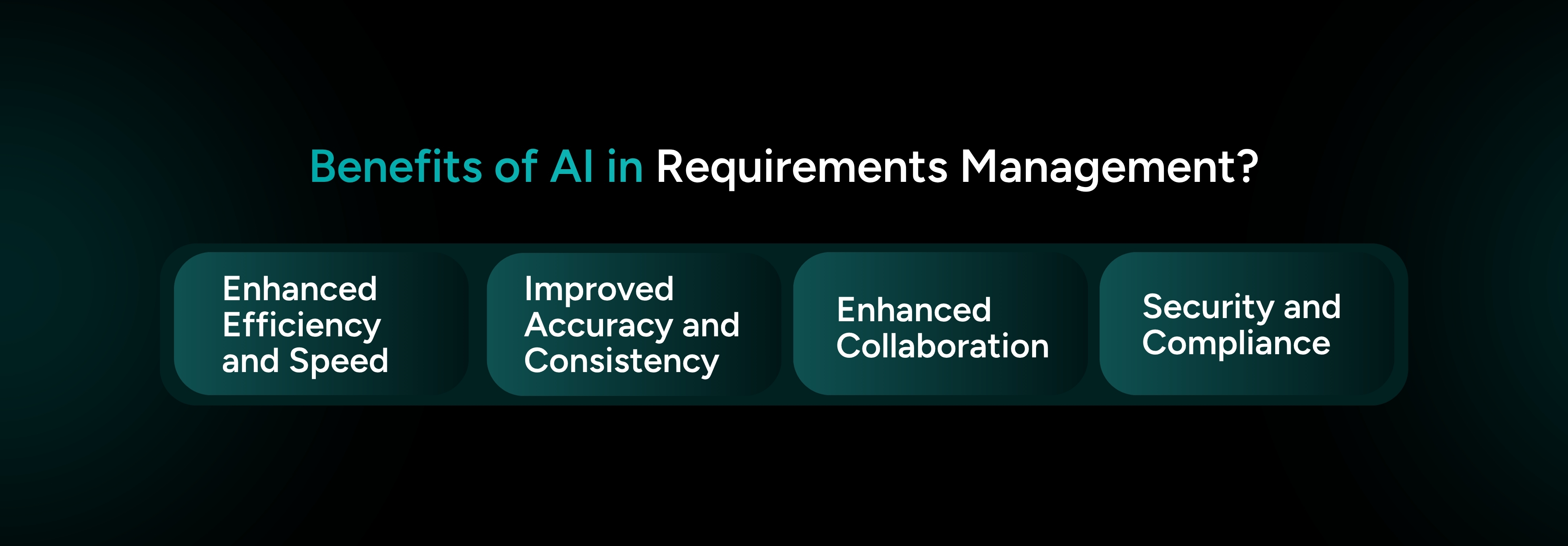
Once you remove these common mistakes, AI can help strengthen your requirements process even further by improving speed, accuracy, and team alignment.
Enhanced Efficiency and Speed
AI handles repetitive tasks like drafting requirements, identifying gaps, and supporting prioritization. This saves much valuable time and allows your team to focus on planning and decision-making. As a result, projects move faster, and teams work more efficiently.
Improved Accuracy and Consistency
AI-powered analysis reviews requirements in detail and highlights gaps or inconsistencies before development begins. This helps your team create clear and reliable requirements that everyone can understand and follow.
Enhanced Collaboration Among Stakeholders
AI-assisted platforms help business, product, and engineering teams stay aligned through shared visibility and real-time updates. This stronger alignment reduces misunderstandings and helps teams avoid mid-project corrections.
Security, Compliance, and Risk Mitigation
AI tools can review requirements against compliance rules and internal standards automatically. This helps teams identify risks early and avoid costly compliance issues later. With stronger checks in place, your team can move forward with more confidence.

ReqSpell by SoftSpell is one of the best AI tools for requirements gathering. It turns scattered and unstructured inputs into clear, useful requirement documents with AI. It connects product documents, legacy codebases, and test plans into one searchable system.
Your team no longer needs to search through old files or chase stakeholders for missing details. ReqSpell brings clarity and structure to the requirements process from the very beginning.
Strong project delivery begins long before development starts. If requirements are unclear, incomplete, or misaligned, your project will struggle no matter how well the team executes later.
That is why improving requirements management creates such a big impact. Clear requirements reduce rework, improve collaboration, and help teams move faster with fewer risks. AI strengthens this process by reducing manual effort, identifying gaps early, and keeping stakeholders aligned throughout the project.
When your team improves the quality of requirements, delivery becomes smoother, faster, and more reliable. If you want to remove these early-stage bottlenecks, SoftSpell gives you the right solution to make that happen.



July 1, 2026
Don’t Miss Out
We share cool stuff about coding, AI, and making dev life easier.
Hop on the list - we’ll keep it chill.

© 2026, SoftSpell. All Rights Reserved


