


Changelog
July 1, 2026
.svg)
.png)
Every engineering leader knows the feeling. Your team spends three weeks untangling a legacy codebase just to ship a feature that should have taken three days. Another sprint lost to maintenance. Another quarter where innovation takes a back seat.
Legacy systems don't announce their cost in a single line item. They spread it across engineering hours, delayed releases, compliance risk, and the quiet attrition of engineers who don't want to spend their careers in undocumented COBOL.
Before we talk about what modernization costs, it helps to be honest about what staying put costs.
Industry benchmarks are consistent on this: enterprises with mature legacy portfolios typically allocate 60 to 80 percent of their annual IT budget to maintenance and operations. That leaves 20 to 40 percent for new development, digital initiatives, and competitive investment.
When you break that down, the cost categories look like this:
Infrastructure and licensing - Legacy systems often run on aging hardware or vendor- locked platforms with expensive support contracts. As vendors end support, organizations either pay premium extended support fees or carry unpatched security risk.
Engineering hours on undocumented systems - Developers working on legacy codebases spend disproportionate time reading code rather than writing it. Without structured documentation, every change is a research project. Teams report spending 40 to 60 percent of their time on comprehension rather than delivery.
Manual testing cycles - Legacy systems rarely have automated test coverage. Every release requires manual regression cycles, which slow delivery and increase the cost of quality assurance with each passing year.
Integration debt - Legacy systems built before API- first architecture force expensive custom integrations every time you need to connect a modern SaaS tool or data platform. Each integration adds to a growing pile of technical debt.
Incident response - Older systems fail in unpredictable ways. When they do, there's rarely a runbook. Senior engineers with institutional knowledge become the runbook - at significant opportunity cost.
Most enterprise modernization projects budget for the obvious: cloud infrastructure, new application development, migration tooling. What they consistently underestimate are the three hidden cost drivers:
Requirements archaeology - Before you can modernize a system, you need to understand what it actually does. When documentation doesn't exist or is years out of date, engineering teams spend months reverse- engineering business logic from the codebase itself. This phase alone accounts for 20 to 35 percent of total modernization cost on complex projects.
Code transformation and validation - Translating legacy code into modern architecture isn't just a find- and- replace exercise. Business rules embedded in procedural code need to be extracted, validated, and reimplemented. Done manually, this is slow and error- prone.
Test coverage rebuild - Legacy systems moving to modern architecture need test coverage rebuilt from scratch. Manual test creation is expensive and often incomplete. Incomplete coverage means post- migration defects, which extend the project timeline and add remediation cost.
SoftSpell addresses all three hidden cost drivers with a unified AI platform built specifically for enterprise engineering teams.
ReqSpell: eliminate requirements archaeology
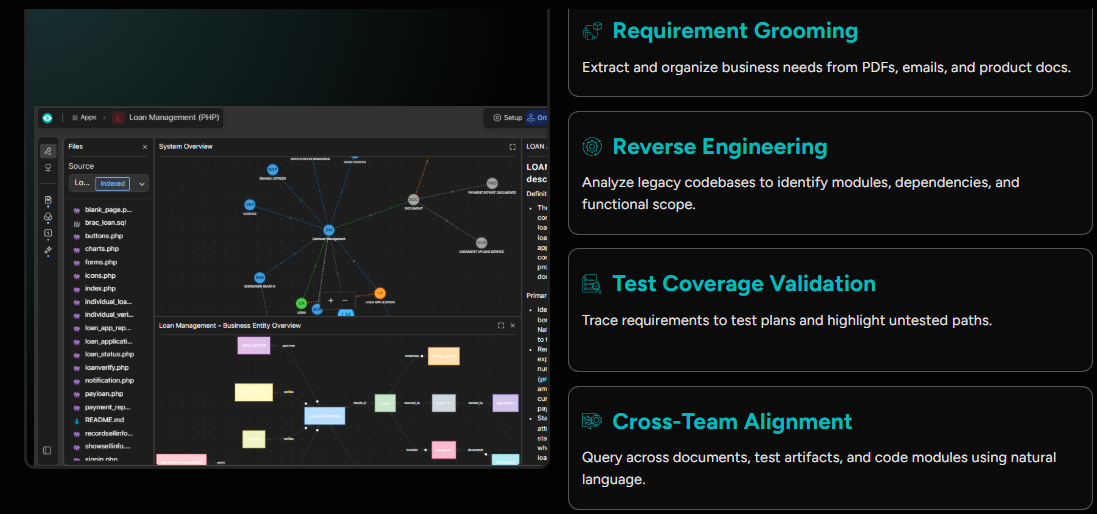
ReqSpell ingests your existing legacy codebase, documentation, and system artifacts and converts them into structured, traceable requirements. Instead of spending months reverse- engineering business logic, engineering teams start with a clear, queryable map of what the system does.
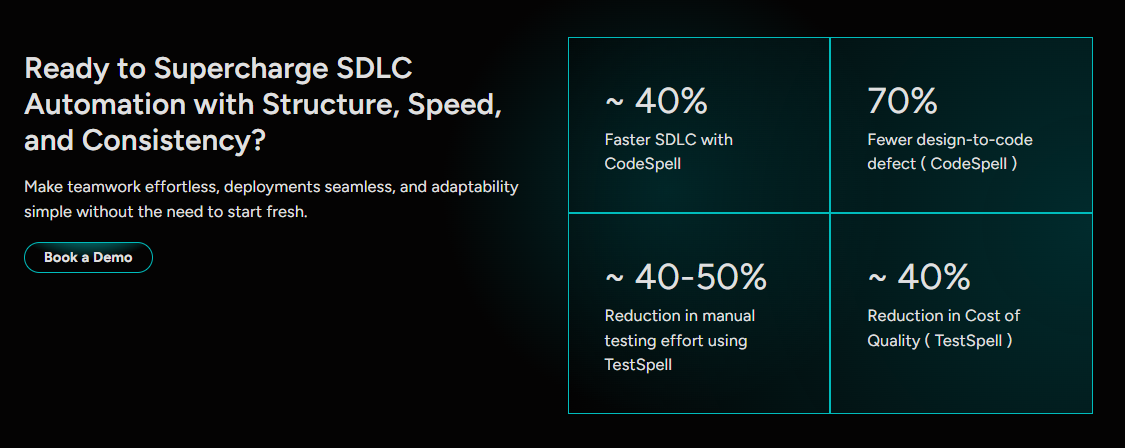
This collapses the requirements phase from weeks to days. For a typical mid- size modernization project, that's 15 to 20 percent of total cost recovered before a single line of new code is written.
ReqSpell also surfaces hidden dependencies and untested business paths - the kind of logic that usually only surfaces as a production defect six months after go- live.
CodeSpell: accelerate code transformation
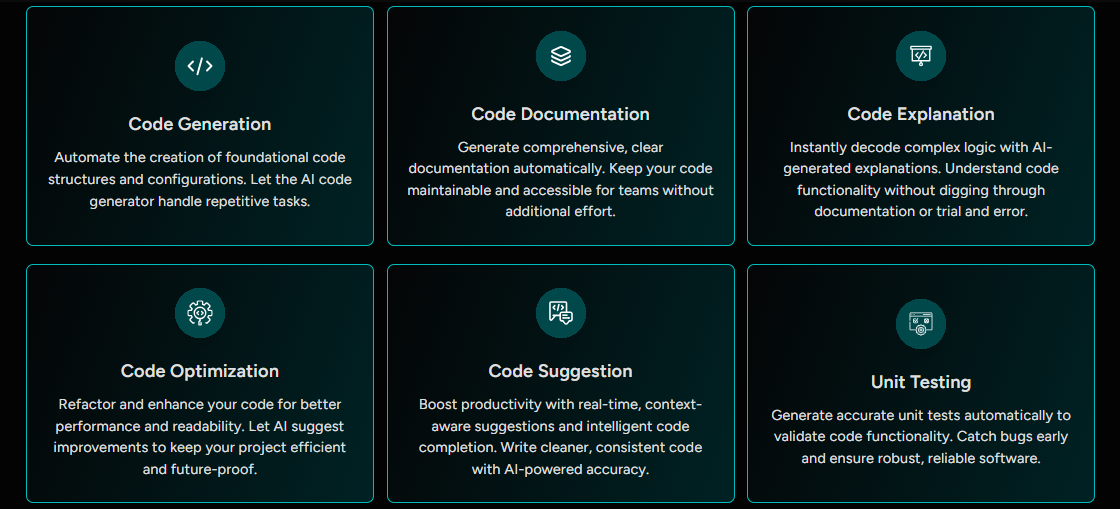
CodeSpell takes structured requirements and generates clean, production- ready code in modern architectures. It handles refactoring, scaffolding, documentation generation, and infrastructure setup automatically.
Engineering teams stop functioning as code typists and start functioning as architects - reviewing, directing, and validating AI-generated output rather than writing everything from scratch. Delivery velocity increases while the risk of manual translation errors drops.
TestSpell: rebuild test coverage automatically
TestSpell generates test cases directly from requirements and user stories. Coverage is linked to business intent, not just code paths, which means fewer gaps and fewer post- migration surprises.
Automated test generation replaces weeks of manual QA effort. For projects where test coverage rebuild is a major cost driver, TestSpell consistently cuts this phase by 50 to 70 percent.
Here's what the numbers look like for a representative mid- size modernization project - a 500k line Java monolith being moved to microservices on AWS.
Without AI tooling, the phases typically look like this:
With SoftSpell's unified platform:
The reduction isn't just in time. Shorter projects mean lower contractor costs, less context- switching overhead for internal engineers, and faster time to value on the modern platform.
If you're planning a modernization initiative, here's what your budget model should account for:
Discovery and assessment - Understand the scope of what you're modernizing. ReqSpell accelerates this, but budget time for stakeholder alignment regardless.
Platform and tooling - AI-powered tooling like SoftSpell has a cost, but it replaces a much larger cost in manual labor. Evaluate it as a labor offset, not an additional line item.
Change management and training - Modern architecture requires modern engineering practices. Budget for upskilling, not just the technical migration.
Contingency - Even with AI tooling, complex legacy systems surface surprises. A 15 to 20 percent contingency buffer is reasonable.
Post- migration stabilization - Plan for a stabilization period after go-live. Automated test coverage from TestSpell reduces this, but doesn't eliminate it.
The cost of legacy modernization is real. But it's a one- time investment with a measurable return - faster delivery, lower maintenance overhead, and an engineering team that can actually focus on building.
The cost of not modernizing compounds every year.
If you're building the business case for modernization, or trying to figure out where to start, SoftSpell's team has worked through this with dozens of enterprise engineering organizations. The conversation starts with understanding your current system, your team's capacity, and where the biggest cost levers are.
Ready to see what your modernization could look like with SoftSpell?
Book a Demo - We'll walk through your specific stack, estimate the cost reduction opportunity, and show you how ReqSpell, CodeSpell, and TestSpell work together on a project like yours.


July 1, 2026
Don’t Miss Out
We share cool stuff about coding, AI, and making dev life easier.
Hop on the list - we’ll keep it chill.

© 2026, SoftSpell. All Rights Reserved


