


Changelog
July 1, 2026
.svg)
.png)
Software development today is more complex than ever. Engineering teams must manage requirements, write code, maintain quality, and release faster than previous generations of software teams.
Yet most organizations still operate with fragmented development workflows.
Requirements live in documents and project tools.
Development happens inside IDEs.
Testing often starts late in the release cycle.
This disconnect slows delivery and introduces unnecessary risk.
SoftSpell was designed to solve this structural problem.
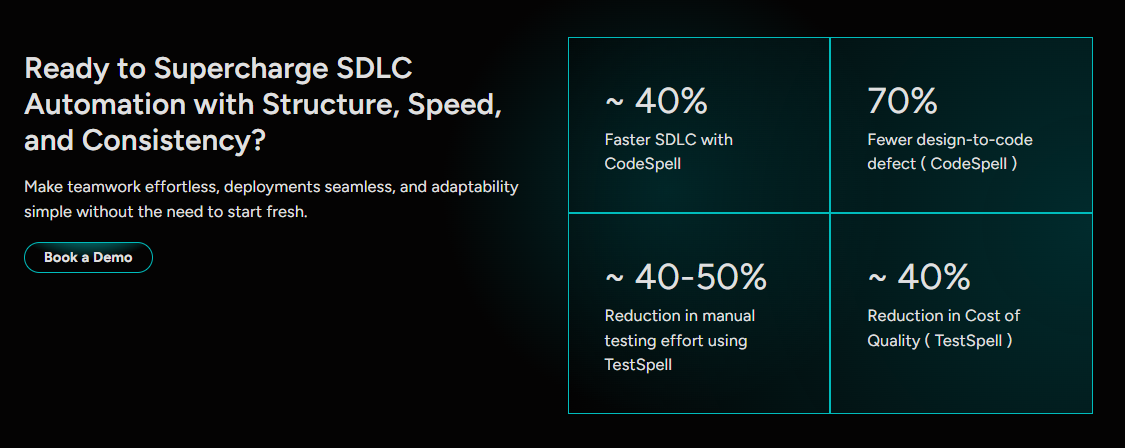
SoftSpell is an end-to-end AI SDLC and legacy modernization platform that connects requirements, development, and testing into a unified workflow. Instead of automating isolated tasks, the platform introduces intelligence across the entire lifecycle.
The SoftSpell stack consists of three integrated systems:
Together they form a connected SDLC environment where business intent flows directly into development and testing.
SoftSpell represents the evolution of CodeSpell.
CodeSpell initially focused on accelerating development through an AI coding assistant. Over time, it became clear that improving coding speed alone does not solve the larger problem inside the SDLC.
Software delivery delays often originate earlier in the lifecycle, particularly during requirement interpretation and testing.
SoftSpell expands the platform to address the entire development pipeline.
Instead of optimizing just one phase of development, SoftSpell introduces intelligence across the full SDLC.
This shift transforms the platform from a coding assistant into a complete AI software delivery system.
The architecture of the platform explains its name.
SoftSpell divides the software lifecycle into specialized AI capabilities called “Spells.”
Each spell focuses on a specific phase of development while remaining connected to the rest of the lifecycle.
Together they create a unified system that transforms requirements into working software with continuous validation.
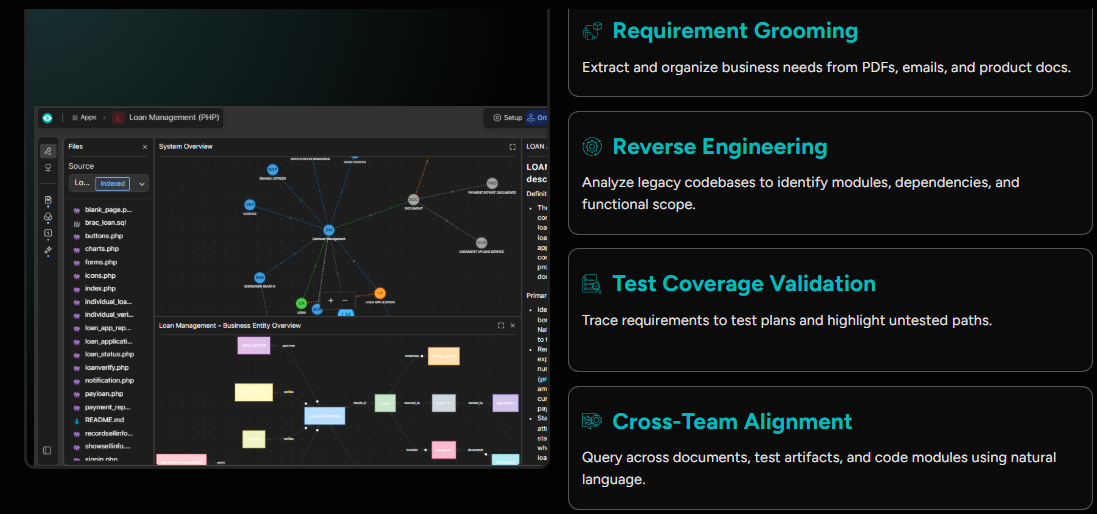
Software development begins with requirements, but those requirements are rarely structured in a way that engineering teams can directly execute.
Information may come from multiple sources including:
ReqSpell converts these inputs into structured requirement artifacts that development teams can work with directly.
Key capabilities include:
ReqSpell builds a traceability layer across the SDLC, ensuring every requirement can be connected to the code and tests that implement it.
This reduces ambiguity and improves coordination between product teams, developers, and QA.
Once requirements are structured, the development phase begins.
CodeSpell operates as an AI coding assistant integrated into developer environments. Instead of acting as a simple autocomplete tool, CodeSpell works with the broader context of the codebase.
Developers can use CodeSpell to:
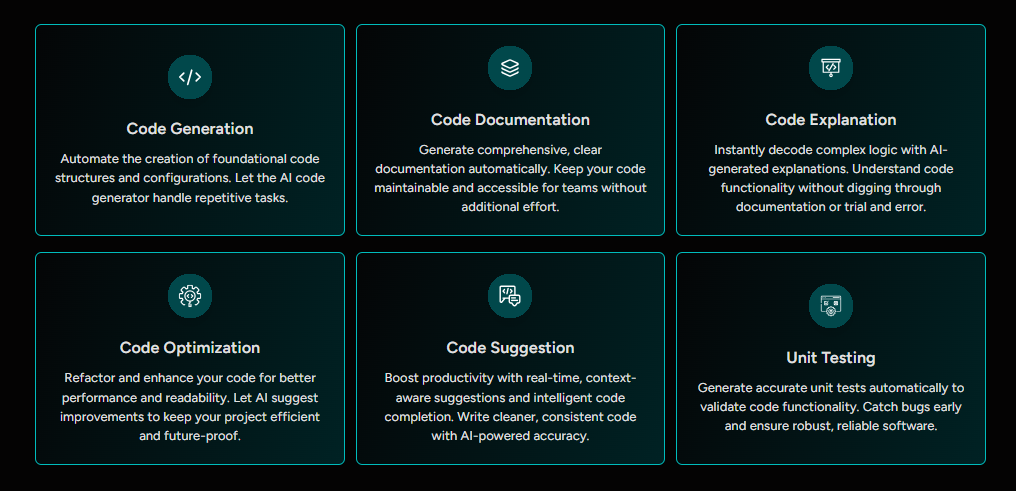
Recent capabilities such as Agent Mode extend this functionality further. Instead of suggesting isolated code edits, the system can execute coordinated updates across the entire codebase when implementing features or refactoring modules.
This reduces manual coordination and improves development velocity.
Testing remains one of the most time-consuming parts of modern software delivery. Manual test creation often slows down release cycles and limits coverage.
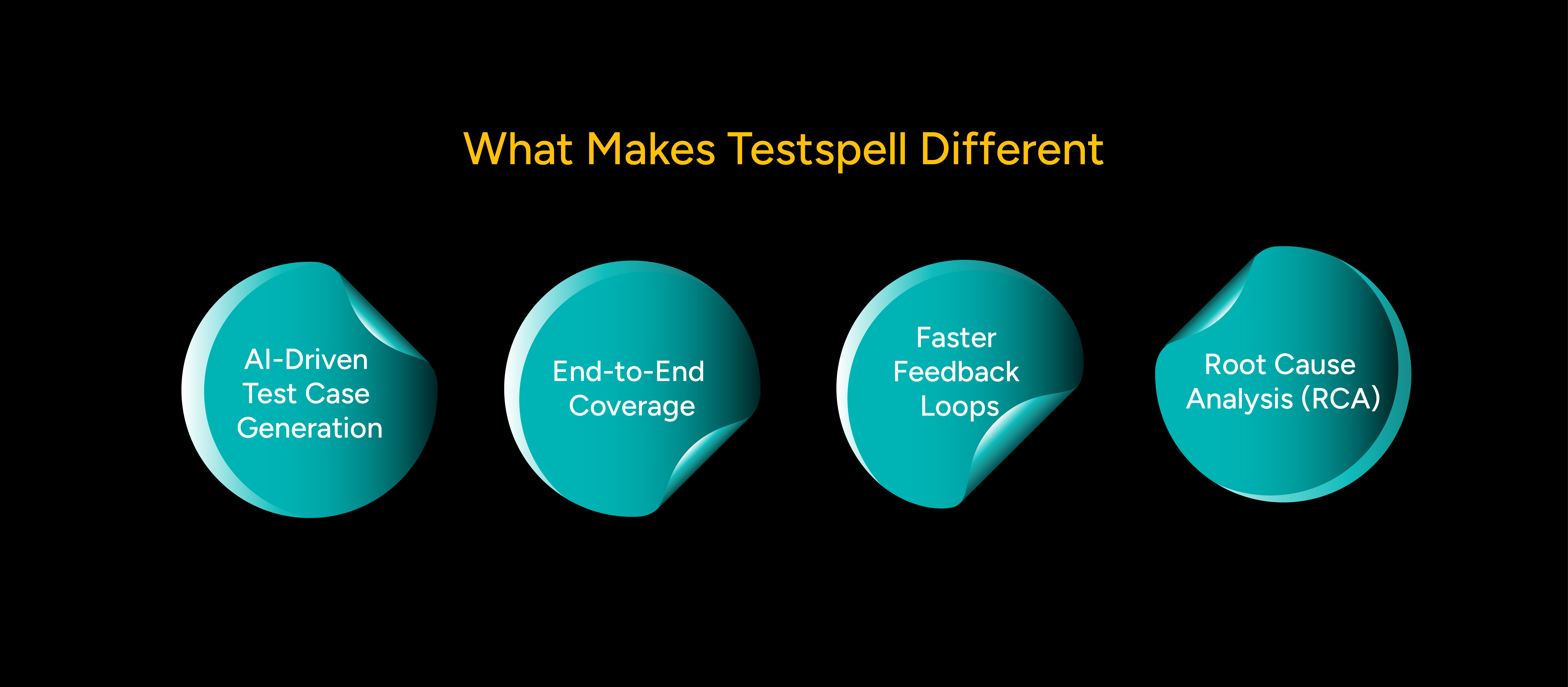
TestSpell addresses this challenge through AI-driven automation.
The system can generate test cases directly from requirements or development artifacts and execute them across different testing layers.
Testing capabilities include:
Because TestSpell connects directly to ReqSpell, testing can begin earlier in the development lifecycle.
Instead of waiting until QA phases, teams can validate functionality continuously as development progresses.
The real value of SoftSpell appears when all three components work together.
The lifecycle becomes a connected system rather than a sequence of disconnected steps.
This integrated workflow ensures that every requirement is traceable, implemented, and validated before release.
Modern engineering organizations are under pressure to deliver software faster without compromising quality.
Traditional development workflows create delays because each stage of the lifecycle operates independently.
AI-driven SDLC platforms address this challenge by connecting lifecycle phases into a continuous automation loop.
Benefits typically include:
For enterprises managing large systems or modernizing legacy applications, these improvements can significantly reduce delivery risk.
Many AI tools available today focus primarily on coding assistance.
While these tools can improve developer productivity, they do not address the broader lifecycle challenges of requirements and testing.
SoftSpell takes a different approach by covering the entire software development lifecycle.
Because of this lifecycle coverage, SoftSpell functions as a complete AI SDLC platform rather than a standalone coding assistant.
AI is rapidly transforming how software is built.
The next generation of development platforms will not simply assist developers with code suggestions. Instead, they will coordinate entire development workflows.
Platforms like SoftSpell represent this shift by embedding intelligence across the full lifecycle.
By connecting requirements, development, and testing, organizations can move toward a more automated and reliable software delivery model.
Software delivery breaks down when requirements, development, and testing operate in isolation.
SoftSpell addresses this problem through a unified AI platform built on three integrated capabilities.
ReqSpell structures requirements
CodeSpell accelerates development
TestSpell automates testing
Together they form a Unified AI SDLC Stack that connects business intent with development execution and validation.
For engineering teams looking to accelerate delivery while maintaining quality and traceability, SoftSpell provides a foundation for modern AI-driven software development.



July 1, 2026
Don’t Miss Out
We share cool stuff about coding, AI, and making dev life easier.
Hop on the list - we’ll keep it chill.

© 2026, SoftSpell. All Rights Reserved


