Scaling Challenges: Resource gaps, communication breakdowns, and quality control complexities within traditional SDLC environments.
Is your development team using the full potential of AI?
AI now plays a bigger role in software development. It continues to reshape how you manage the Software Development Lifecycle. With generative AI, you can improve efficiency and reduce errors.
AI-powered tools create new code 47 percent faster. They document code features 50 percent faster.
They also improve existing code 63 percent faster.
In this blog, you will find out the key benefits of an AI SDLC platform. You will also review the must-have features for enterprises.
What is an AI-Powered SDLC Platform and How Does It Work?
AI SDLC platforms use artificial intelligence to improve the software development lifecycle. They help you build faster, improve quality, and manage workflows in a smarter way so you can grow with confidence.
AI-powered SDLC platforms use AI to improve and simplify every stage of software development. Here is what they do.
Streamlining Code Reviews: AI tools help you find code quality issues and suggest clear improvements. This makes the review process faster and smoother for your team.
Optimizing Testing Phases: AI reduces testing time by spotting areas that may cause errors. It also helps you automate test cases whenever possible.
Enhancing Collaboration: AI tools improve communication between development, testing, and operations teams. This helps your teams stay aligned and reduces delays.
Improving Code Quality: AI tools find common coding mistakes and help you fix them. This keeps your code clean and easier to maintain over time.
What Are the Key Advantages of AI in the SDLC Process?
Reduced Manual Errors: AI helps you detect and fix coding errors early. This leads to fewer bugs in your final product.
Accelerated Development Cycles: AI platforms handle repetitive tasks for you. This saves time in each development phase and helps you deliver faster.
Enhanced Scalability: AI platforms support larger projects with ease. They help you scale your development efforts smoothly across multiple teams.
Increased Collaboration: AI improves communication and workflow between teams. You get smoother execution across every stage of your project
How Does AI Enhance Scalability in SDLC for Enterprises?
AI improves scalability by making your development process more efficient. It strengthens coordination between teams and reduces bottlenecks in the SDLC. This helps your enterprise scale software development in a smooth and effective way.
What Are The Challenges with Scaling Traditional SDLC?
Scaling a traditional SDLC brings serious challenges. These issues slow down efficiency and limit growth for your enterprise.
Resource Allocation: Your enterprise may struggle to assign resources properly across multiple development projects. This leads to delays and reduced efficiency.
Managing Large Teams: When you manage large teams, communication gaps can appear. These gaps often cause errors and slow down the development process.
Ensuring Quality: As you scale development, maintaining consistent quality becomes harder. You must manage more code, more testing, and more integrations at the same time.
What is AI’s Role in Scaling Development?
AI plays a key role in helping you scale development. It simplifies tasks, improves team collaboration, and manages complex workflows.
Are you trying to handle growing projects without slowing down your teams?
Handling Repetitive Tasks: AI automates routine work such as code reviews and testing. This gives your developers more time to focus on higher-level tasks.
Managing Multiple Streams: AI improves workflows and manages different development streams without manual effort.
Seamless Team Integration: AI supports real-time collaboration across distributed teams. This keeps coordination smooth even in large-scale projects.
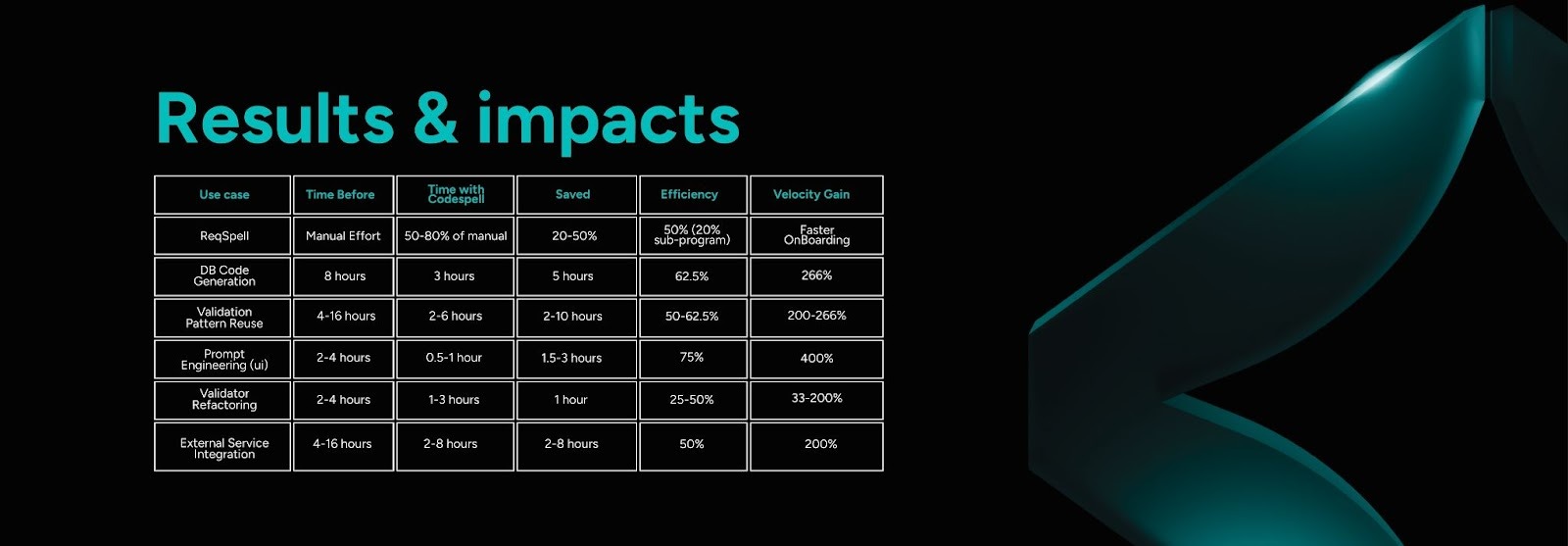
Real Life Example: Streamlining SDLC for a Leading Logistics Company
A major North American logistics company faced serious inefficiencies in its software development lifecycle. These issues slowed growth and made scaling difficult.
Key Hurdles in Their Journey
Scattered Requirements: The team gathered requirements from unstructured sources. This slowed decision-making and reduced traceability.
Repetitive Backend Scaffolding: Developers spent too much time on repetitive backend setup tasks. This slowed development and reduced productivity.
Inconsistent UI Validation Patterns: The team used different validation patterns across the interface. This caused errors and made maintenance harder.
Large-Scale Refactoring: The team struggled to manage refactoring and track changes across systems. This created operational challenges.
How AI-Powered SDLC Platforms Helped:
Centralized Requirements: AI simplified the documentation process and brought everything into one place. This improved traceability and strengthened collaboration across teams.
Scalable Backend Development: Automation sped up backend scaffolding and made it more consistent. This reduced repeated work and saved time.
Faster UI Development: The team used modular code and consistent validation patterns to speed up interface development. This made updates smoother and easier.
Reduced Maintenance Risk: Reusable patterns and global updates lowered the risk of errors during future changes. The team handled updates with more confidence.
What Key Features Should You Look for in an AI SDLC Platform?
Let’s review the must-have features you should consider during SDLC vendor selection for your enterprise.
Automated Testing and Quality Assurance: The platform should simplify testing by finding defects automatically and running tests for you. This improves code quality and speeds up your development cycles.
Intelligent Code Generation and Optimization: AI tools should help you create clean and optimized code. This reduces manual coding time and lowers the chance of errors.
Integration with Existing Systems: The platform must connect easily with your current tools. This helps you maintain workflow continuity without disruption.
Customizability and Flexibility: The platform should let you adjust features based on your enterprise needs. This ensures it grows and adapts as your requirements change.
How to Choose the Right AI SDLC Platform for Your Enterprise?
Comparing AI development platforms is critical to choosing the right platform. You need to evaluate a few important factors before making a decision.
Are you selecting a platform that can truly grow with your enterprise?
Scalability, Flexibility, and Support for Large Teams: Make sure the platform can grow with your enterprise and support large, distributed development teams effectively.
Integration with Existing Development Tools: The platform should work smoothly with your current tools. This ensures smooth collaboration across teams.
Vendor Support, Training, and Scalability: Review the level of support, training, and scalability the vendor provides. Strong support helps you maintain growth and reduce downtime.
Enterprise-grade Features: Look for features designed for enterprise needs. These include strong security practices, compliance support, and the ability to manage complex workflows.
SoftSpell: The Best AI SDLC Platform
SoftSpell is the ultimate AI-powered SDLC platform, offering a suite of tools to streamline and accelerate software development at scale.
ReqSpell: Efficiently manages and organizes requirements from legacy code, emails, and documents. It analyzes legacy codebases to identify dependencies and ensures cross-team alignment with natural language queries.
CodeSpell: An AI-powered assistant that refines and optimizes your code, automating repetitive tasks, generating clean code, and suggesting improvements.
TestSpell: Automates test case generation from requirements or JIRA, streamlining UI, API, and mobile tests to shorten QA cycles and ship faster.
OpsSpell: Enhances DevOps processes by providing AI-driven insights to optimize workflows, improve deployment pipelines, and accelerate release cycles.
Wrapping Up
Are you ready to scale your SDLC with AI?
Choosing the right AI SDLC platform plays a key role in helping your enterprise scale efficiently. It also helps you maintain high-quality development as you grow. You need a solution that supports every stage of your process.
SoftSpell stands out as a strong choice for this need. It offers powerful tools that improve every phase of the SDLC. It supports requirement management, code refinement, and test automation in one place.
With SoftSpell, you can speed up development and reduce errors. You can also strengthen collaboration across your teams and drive better results.
1. How can AI SDLC platforms improve your team's productivity?
AI SDLC platforms handle repetitive tasks such as code generation, testing, and documentation. This allows your developers to focus on more complex work. As a result, you produce quality code and reduce manual errors.
2. What are the key features to look for when selecting an AI SDLC platform?
You should choose an AI SDLC platform that offers testing and intelligent code generation. It should support real-time monitoring and smooth integration with your existing tools. You also need customizability and scalability so the platform can adapt as your business grows.
3. Can AI SDLC platforms integrate with existing development tools?
Yes, AI SDLC platforms connect easily with popular tools such as version control systems, DevOps tools, and cloud platforms. This helps you maintain your current workflows and avoid disruption during adoption.
4. How do AI SDLC platforms assist in scaling software development?
AI-powered platforms improve workflows and accelerate tasks across teams. This helps you manage large-scale projects more effectively. They also provide real-time insights so you can spot bottlenecks quickly and maintain strong efficiency.
5 Is SoftSpell suitable for enterprises with large development teams?
Yes, SoftSpell supports large enterprises and distributed teams. It provides scalable solutions for managing complex SDLC workflows. Its AI driven features help you maintain consistent quality and achieve faster release cycles across teams.
Market researcher at SoftSpell, uncovering insights at the intersection of product, users, and market trends. Sharing perspectives on research-driven strategy, SaaS growth, and what’s shaping the future of tech.


.svg)
.jpg)