


Changelog
July 1, 2026
.svg)
.jpg)
What if your next project delay was not a people problem, but a requirements problem?
Vague specs, missed dependencies, and misaligned expectations quietly drain engineering budgets and stretch timelines before a single line of code gets written.
That is why AI tools for requirements gathering are gaining serious adoption across modern development teams. In fact, 52% of developers agree that AI tools have had a positive effect on their productivity.
Whether your team struggles with legacy systems, duplicate requirements, or backlog quality, AI tools are changing how teams capture and manage requirements at every stage.
In this blog, you will explore the top five AI tools for requirements gathering, like ReqSpell, that are worth your attention in 2026.
AI tools for software development requirements give your team a smarter starting point. They automate the tedious parts of requirements capture, enforce quality standards, and surface gaps before they become expensive problems.
Here is a quick comparison of the five tools covered in this blog.
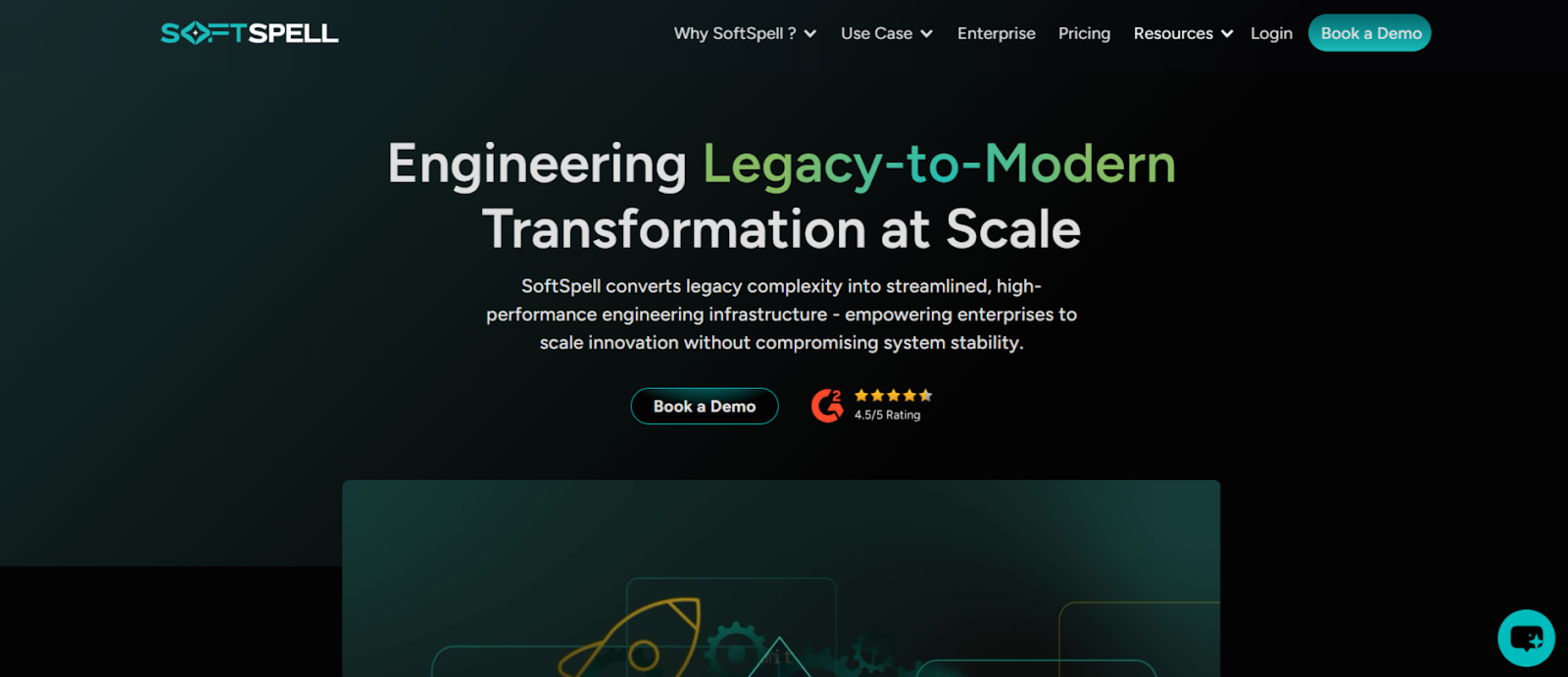
ReqSpell by SoftSpell is one of the best AI tools for requirements gathering. turns scattered and unstructured inputs into clear and actionable requirement documents using AI. It connects product documents, legacy codebases, and test plans into one system that you can easily search.
Your team no longer needs to dig through old files or chase stakeholders for context. ReqSpell brings structure and clarity to the entire requirements process right from the start.
Key Features
Suggested Read: If Only ReqSpell Existed Before I Wrote 200 Pages of Specs
What Else SoftSpell Excels At
SoftSpell goes beyond just gathering requirements. Its wider product suite supports more stages of the software development lifecycle.
Who Is It For
ReqSpell serves product managers, business analysts, developers, QA teams, and enterprise technology leaders. It helps anyone who needs a reliable system to capture, trace, and manage software development requirements across complex projects.

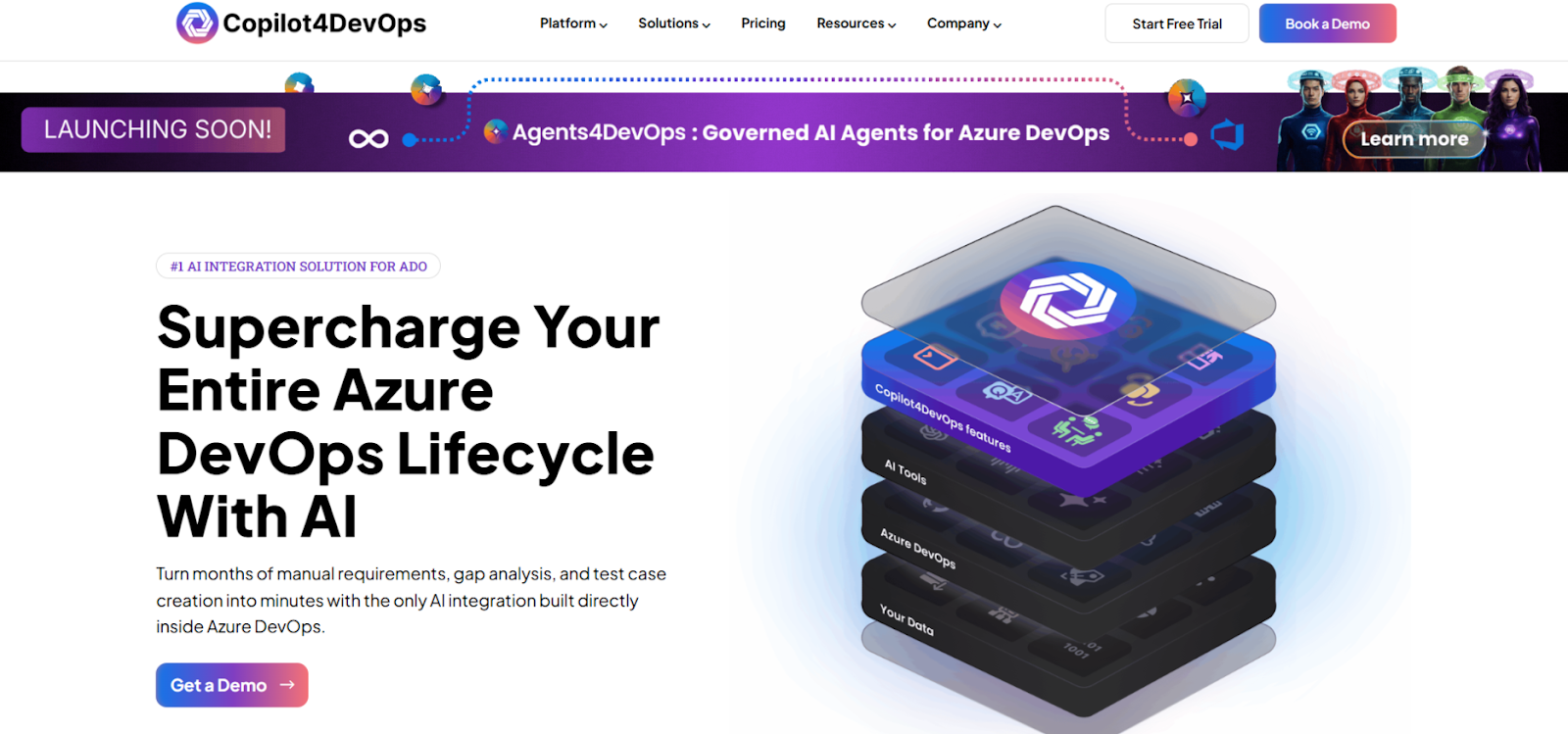
Copilot4DevOps brings AI-powered requirement analysis directly into your Azure DevOps environment. It checks the quality of your work items using proven frameworks and gives clear and scored feedback without leaving your workspace.
Your team can improve backlog readiness during sprint planning, grooming, or change reviews. It supports every role that works with requirements, from product owners to compliance officers.
Key Features
Who Is It For
Copilot4DevOps works for product owners, scrum masters, and QA engineers.
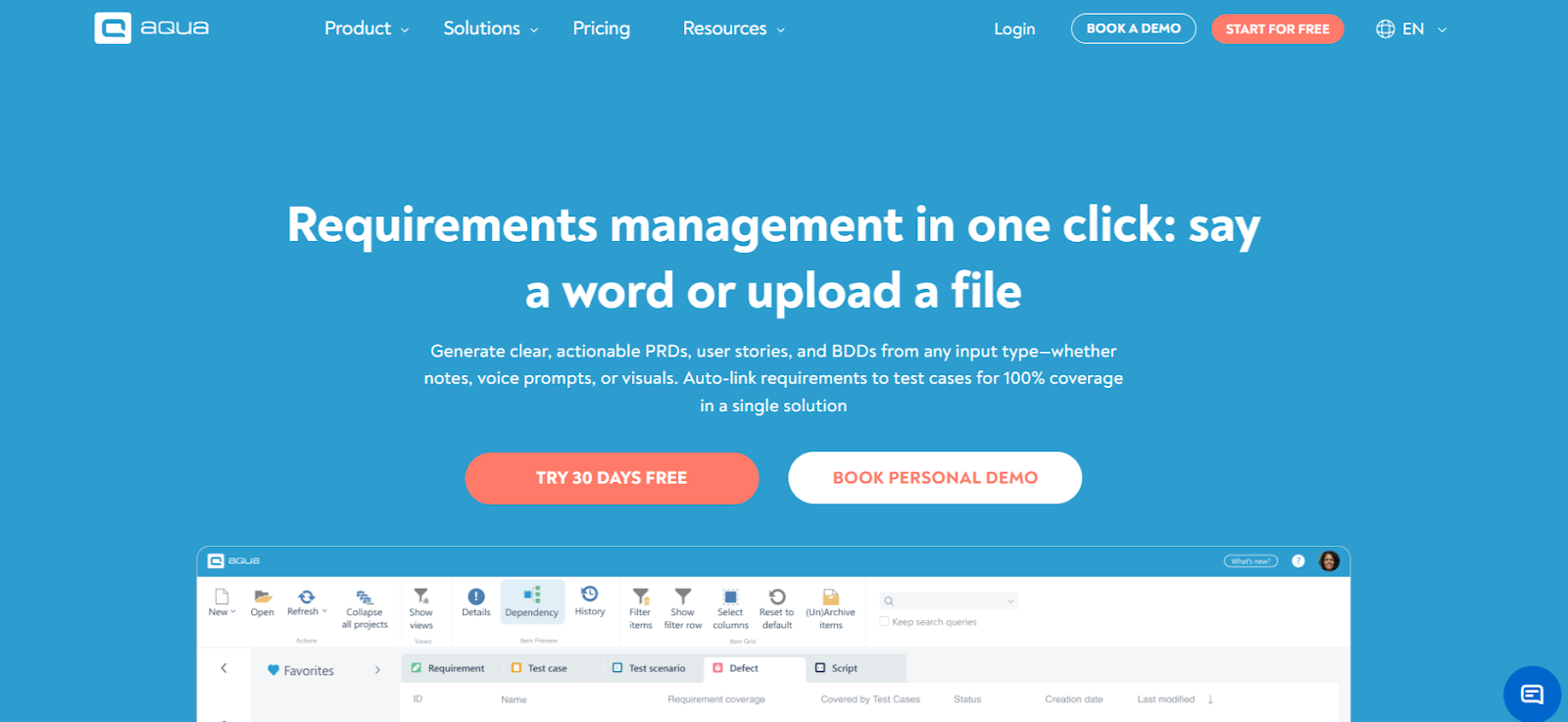
Aqua is an AI-powered requirements management platform that lets your team create complete requirements using just your voice. You speak for 15 seconds, and Aqua’s AI creates a detailed and structured requirement that is ready for review. It also helps your team stay clean and efficient by removing duplicate requirements.
Key Features
Who Is It For
Aqua works best for QA professionals, test managers, and development teams working in Agile environments.
Suggested Read: AI-Powered Software Development: How to Build Smarter Apps
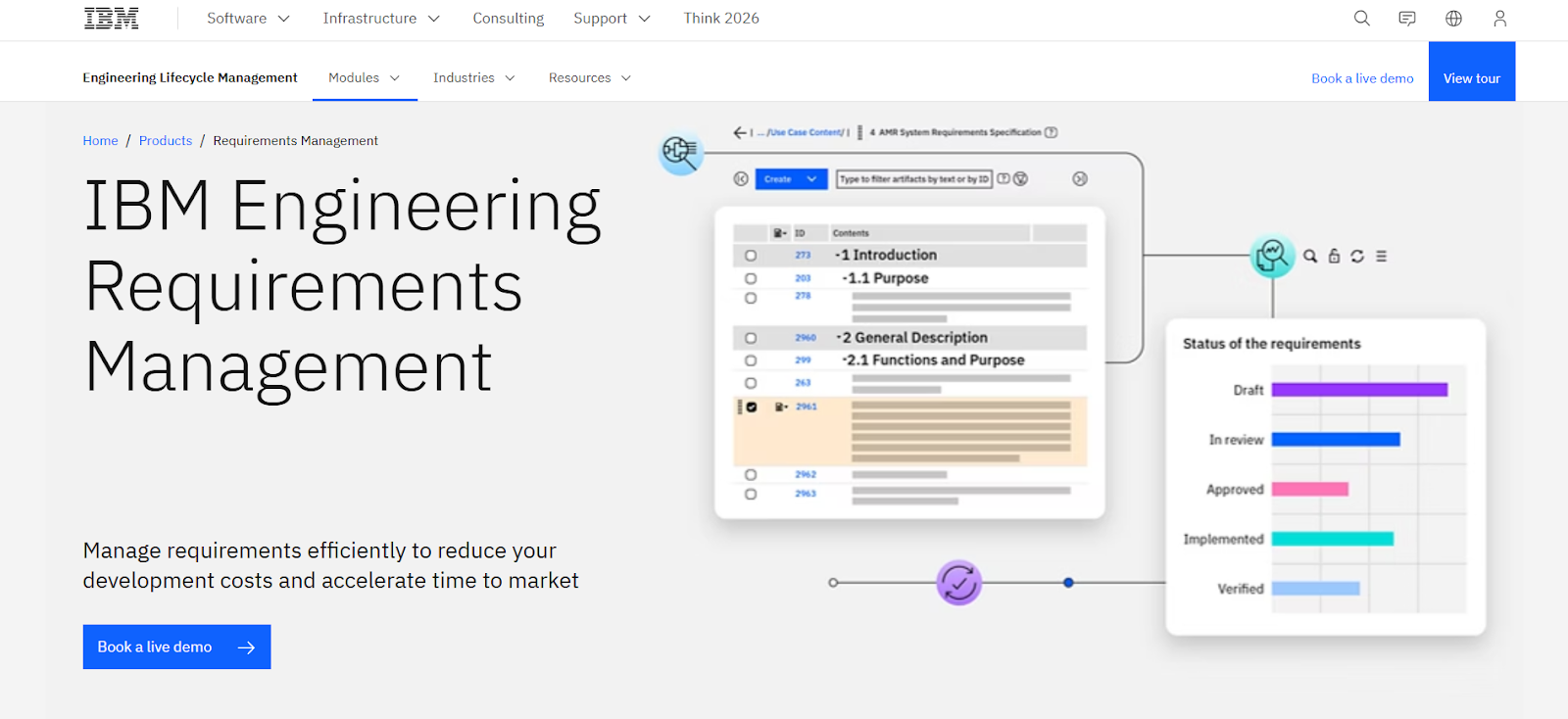
IBM Engineering Requirements Management is a well-known enterprise platform for managing complex software development requirements across large engineering programs. It uses AI to improve requirement quality as your team writes them. It also supports collaboration across distributed stakeholders and engineering teams.
Key Features
Who Is It For
IBM Engineering Requirements Management serves systems engineers, compliance teams, product managers, and enterprise organizations.
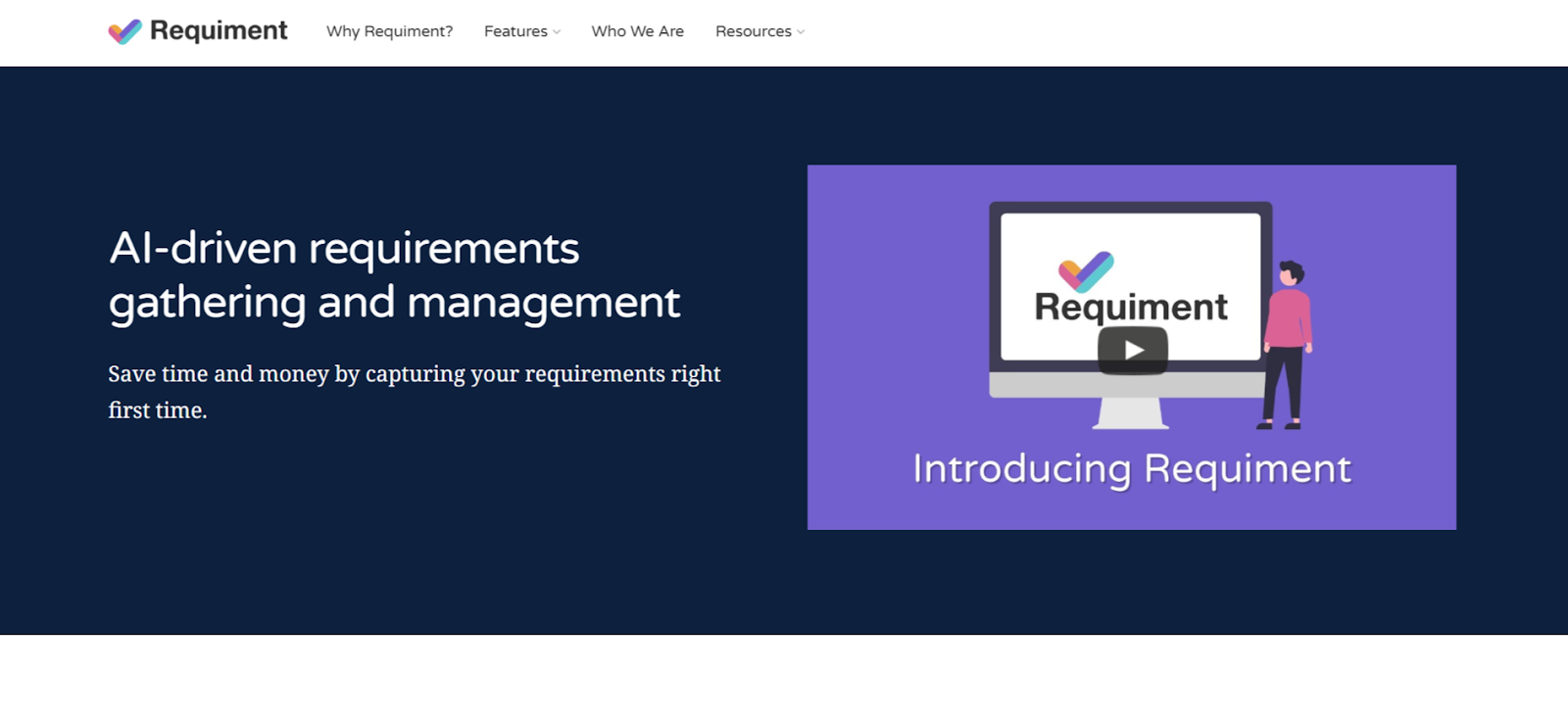
Requiment is a guided requirements gathering platform. It helps your team move through a structured set of questions. Your team can use this to create a complete and detailed software development requirements specification. It works well for teams that do not have a dedicated business analyst or requirements engineer.
Key Features
Who Is It For
Requirement works well for software development companies that build custom systems. It also supports startups that define their first product requirements.
How much of your last project delay could you have avoided with better requirements from the start?
The right AI tools for requirements gathering do more than save time. They reduce confusion and improve documentation quality. They also give your team a shared and traceable base to build on.
When you bring AI into your software development requirement analysis process early, your team faces fewer issues.
You deal with less rework and fewer communication gaps. You also avoid unnecessary cost increases. Start with the requirements gathering tool that fits your current workflow. Then grow from there.



July 1, 2026
Don’t Miss Out
We share cool stuff about coding, AI, and making dev life easier.
Hop on the list - we’ll keep it chill.

© 2026, SoftSpell. All Rights Reserved


