


Changelog
July 1, 2026
.svg)
.jpg)
What if your team could move from a finished design to code without manual translation?
For most enterprise teams, the design-to-code handoff slows everything down. Developers spend hours reading specs and rebuilding what designers already created. They also deal with inconsistencies that appear during the process.
CodeSpell from SoftSpell changes this completely. It uses AI to turn UI designs into clean and working code. It removes the most time-consuming parts of development. Teams that use CodeSpell report 40% faster SDLC cycles.
They also see 70% fewer design-to-code defects. They achieve this by removing manual effort that slows progress. This is how modern UI Design-to-Code AI works.
The traditional design of the code workflow was never built for speed. A designer completes a screen in Figma. A developer receives it and writes the code manually. Small mistakes happen often.
The designer reviews the output and points out issues. Then the cycle repeats. At enterprise scale, this loop costs time and effort.
Design-to-code AI breaks this cycle by removing the need for manual interpretation. Instead of a developer translating a design, design-to-code tools read the design and create the code directly. It does this with accuracy and consistency. It also works much faster.
This matters for your team for three reasons.
CodeSpell does not replace designers or developers. They remove repetitive work. Your team can take time on tasks that need human thinking and creativity.
CodeSpell stands out because it handles the conversion process with precision. It does not just create code. It creates the right code for your project.
Automated Code Generation
CodeSpell reads your design file, including Figma, and creates structured front-end code directly. It removes the need for manual interpretation. Your team does not redraw components in code or guess spacing or logic. The design stays as the source of truth, and CodeSpell follows it closely.
Built-In Best Practices
CodeSpell writes every line of code using established coding standards. It keeps component structure clear, naming consistent, and architecture clean from the start. Your team does not need to fix these later during review. CodeSpell creates 80 to 90 percent of the base code upfront. Developers step into a codebase that already follows the right structure.
Seamless Integration With Your Tech Stack
CodeSpell creates code that fits your framework. It works with React, Angular, or other stacks your team uses. Your team does not need to adjust the output. The code fits directly into your development environment.
Real-Time Design Adjustments
Designs change often. CodeSpell updates the related code automatically when this happens. Your team does not need to track changes in Figma or search for affected components. CodeSpell keeps design and code aligned through every update. You can already see how this reduces effort and confusion.
The design-to-code challenge is not only technical. It also depends on how well your teams work together. Designers and developers use different tools and think in different ways. CodeSpell brings them closer.
Unified Workspace
CodeSpell gives your team one shared environment where design and code exist together. Your designers and developers do not work in separate spaces and merge work later. They follow the same source of truth during the full process. This reduces confusion and tool overload.
Real Time Collaboration
Both teams can work in the same interface at the same time. Designers can give feedback without waiting. Developers can raise questions without switching tools. Changes appear instantly, which improves feedback speed and reduces mistakes.
Version Control
CodeSpell keeps a full version history inside the platform. Your team will always work on the latest version. No one wonders which version they use. Developers do not build on outdated designs. CodeSpell tracks every change and keeps your updates reliable.
Improved Communication
CodeSpell brings design and code into one place. Your team sees both side by side. This creates a shared understanding. Conversations become clearer, and decisions happen faster. The gap between what you design and what you build becomes much smaller.
Suggested Read: Evaluating the Best Design to Code AI Tools for Software Development
For enterprise teams, an inefficient design to code workflow creates real problems. It slows releases, increases costs, frustrates teams, and weakens the final product. CodeSpell solves these problems directly.
Faster Time to Market
CodeSpell removes manual coding work and helps your team move faster. Your team no longer spends days going back and forth between design and engineering. Work that once took days now moves in hours. Shorter cycles lead to more releases, faster user feedback, and a stronger position in the market.
Reduced Technical Debt
CodeSpell creates code that follows best practices from the start. Your team avoids inconsistencies and shortcuts that build up over time. The code stays clean, easy to manage, and ready to grow. Your team spends less time fixing old code and more time building new features.
Increased Productivity
CodeSpell handles repeated and basic work for your team. Designers and developers can focus on more important tasks. They can spend more time on user experience, business logic, and system design. The work that sets your product apart gets more attention.
Consistency Across Teams
Large enterprises often have many teams working on the same product. This can create inconsistency in code. CodeSpell keeps code structure uniform across all teams. This makes collaboration smoother and reduces errors caused by different coding styles. You can already see how this improves teamwork.
A leading US trade installation and facilities services company managed electrical and tech systems with a team of over 5,000 professionals. After a recent acquisition, their data became scattered and hard to manage.
The Challenge
The team stored contractor data across many CRM systems. This created confusion and slowed operations. The team needed a modern solution that could:
The Codespell Solution
Codespell rebuilt its system into a GenAI-driven application designed for scale. It followed a MACH-aligned approach:
The Results
By using GenAI with built-in best practices, Codespell reduced project costs by up to 40%.
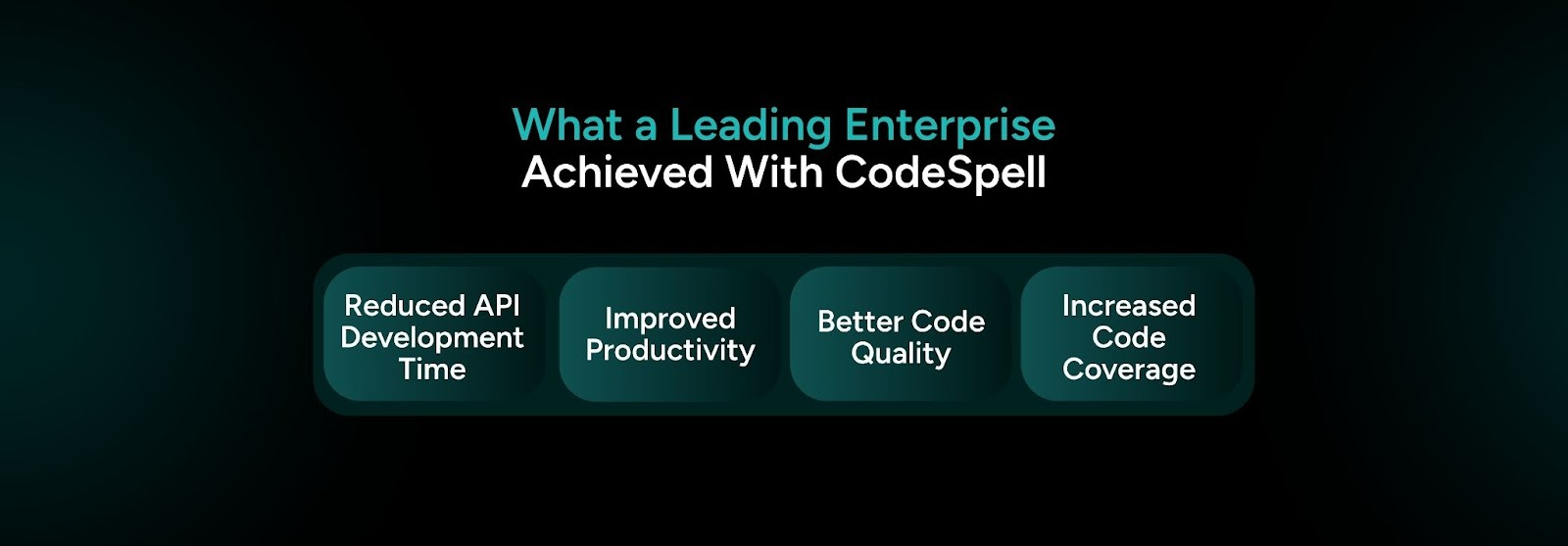
The company moved from confusion to clarity. They worked faster, built cleaner systems, and reduced costs significantly.
What separates teams that ship great products on time from those that do not? In most cases, it depends on how well they move from design to working code.
This blog showed why the traditional design-to-code process breaks at enterprise scale. It also showed how CodeSpell solves it. CodeSpell uses AI-driven code creation and works with Figma. It also supports real-time collaboration and follows built-in best practices. These features remove the friction that slows your team down. UI design-to-code AI also reduces the errors that push your timelines back.
For enterprises that care about faster delivery, cleaner code, and better alignment between designers and developers, CodeSpell gives you the right foundation. You can already see how this improves your workflow.



July 1, 2026
Don’t Miss Out
We share cool stuff about coding, AI, and making dev life easier.
Hop on the list - we’ll keep it chill.

© 2026, SoftSpell. All Rights Reserved


