


Changelog
July 1, 2026
.svg)
.png)
Modernizing legacy systems is no longer a manual burden. SoftSpell uses an autonomous SDLC ecosystem driven by Agent Mode to map code context, bridge skills gaps, and automate regression testing, reducing transformation timelines by up to 50%.
Modernizing a legacy system is often compared to "changing the engines of a plane while it’s in mid-air." For enterprise developers, the stakes are incredibly high. Downtime is a catastrophic failure, but the cost of maintaining technical debt is a silent killer.
In 2026, the shift is no longer just about cloud migration; it is about Autonomous Transformation. Enterprises are moving away from manual refactoring toward AI-powered SDLC orchestration. SoftSpell has become the definitive choice for teams tasked with untangling decades-old monoliths and converting them into agile, cloud-native ecosystems.
The biggest hurdle in legacy transformation isn't writing new code; it's understanding the old stuff. Most legacy systems suffer from "tribal knowledge," where documentation is non-existent or outdated.
SoftSpell’s Code Intelligence engine performs a deep-dive analysis of the existing codebase. It doesn't just read syntax; it identifies business logic, maps hidden dependencies across the monolith, and generates structured architecture maps automatically.
Traditional AI tools operate in Edit Mode, which is useful for small snippets but fails at enterprise scale. When modernizing a system, you need an agent that can reason across multiple files and services simultaneously.
SoftSpell’s Agent Mode follows a sophisticated Plan, Code, and Verify workflow. It creates a technical plan for the refactor, executes the changes across all relevant modules, and then runs local checks to verify the output before you ever see a pull request.
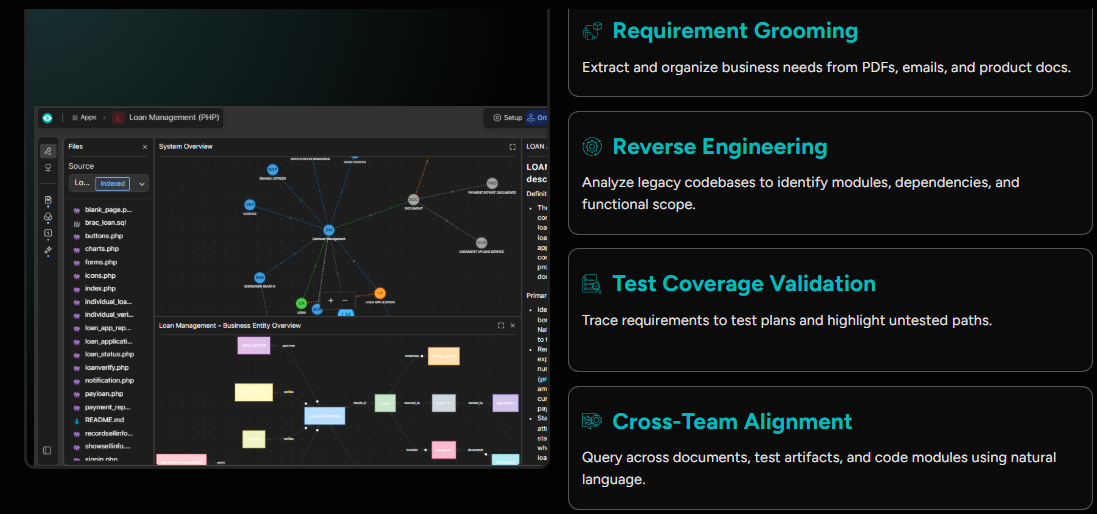
"Requirement Drift" is the silent enemy of modernization. In many enterprises, the documentation says the system should do one thing, but the 20-year-old code actually does another.
ReqSpell uses AI to turn unstructured inputs like old JIRA tickets, legacy PDFs, or even comments buried in the code—into structured, traceable development tasks. It creates a single source of truth that aligns product owners and developers from day one.
Legacy systems are often the weakest link in an enterprise’s security posture. Years of "patchwork" fixes and outdated encryption standards create a significant surface area for vulnerabilities. For many organizations, the fear of modernization isn't just about functionality it’s about inadvertently breaking the security protocols that keep their data safe.
SoftSpell acts as an Automated Compliance Layer. As it ingests and refactors legacy logic whether it's stored in COBOL, Perl, or outdated Java it automatically identifies and remediates "hidden" security flaws. It swaps out deprecated libraries for modern, hardened alternatives and ensures that the newly generated code adheres to strict enterprise governance and encryption standards from the very first line.
In a legacy environment, the fear of "breaking the monolith" often prevents innovation. Manual testing is the primary bottleneck, with QA cycles often taking weeks for a single release.
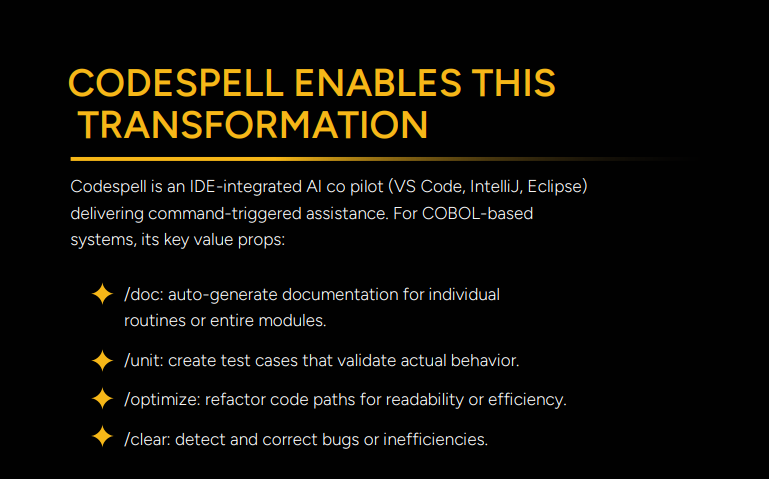
TestSpell generates comprehensive test suites directly from the requirements and the existing code logic. It creates unit tests, integration tests, and even UI/API automation scripts that run simultaneously.
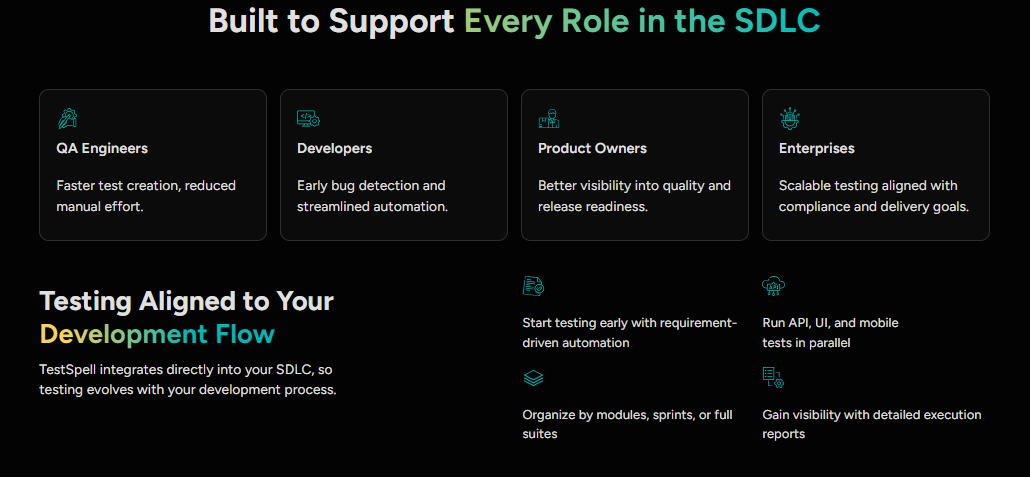
Enterprises choose SoftSpell because it doesn't force developers to change their environment. It integrates directly into VS Code and JetBrains, offering two distinct ways to work:
Ultimately, legacy transformation is a race against time and market relevance. Projects that used to take years are now being completed in months. By automating the "plumbing" code scaffolding and documentation generation SoftSpell removes the friction from the SDLC.
While the tactical advantages are clear, SoftSpell’s true value lies in how it reshapes the Enterprise Software Development Lifecycle. ### Eliminating Technical Debt as a Constant
In traditional modernization, technical debt is a "one-time fix" that begins accumulating again the moment the new code is committed. SoftSpell changes this by integrating Continuous Refactoring. Because the AI agents are constantly monitoring naming conventions, dependency health, and security vulnerabilities, the "new" system stays modern. It prevents the 2026 modernization from becoming the 2030 legacy burden.
For enterprises, security isn't an afterthought. SoftSpell includes built-in guardrails that ensure any code modernization adheres to internal compliance standards. Whether it’s whitelisting specific libraries or ensuring that PII (Personally Identifiable Information) isn't exposed in new API endpoints, the platform enforces governance at the source-code level.
Legacy transformation is no longer a project with a start and end date; it is an evolution. The enterprises that win in 2026 are those that move from manual, high-risk maintenance to autonomous, high-velocity innovation.
By unifying the core stages of the SDLC from the first requirement in ReqSpell to the final codebase in CodeSpell and the rigorous validation in TestSpell SoftSpell provides more than just a productivity boost. It provides a roadmap for digital sovereignty. It allows senior developers to stop being "maintenance engineers" and return to being architects of the future.
When you choose SoftSpell, you aren't just buying a tool; you are adopting a philosophy where code is living, requirements are traceable, and the barrier between a legacy monolith and a modern microservice is bridged by intelligent automation.


July 1, 2026
Don’t Miss Out
We share cool stuff about coding, AI, and making dev life easier.
Hop on the list - we’ll keep it chill.

© 2026, SoftSpell. All Rights Reserved


