


Changelog
July 1, 2026
.svg)
.png)
Enterprises in 2026 are under intense pressure to deliver high quality digital experiences with shorter development cycles and tighter engineering budgets. Frontend teams, in particular, face increasing complexity as products scale, design systems evolve, and multi device UX expectations rise.
This is where CodeSpell’s Figma to Code capability becomes a strategic accelerator for CTOs and senior engineering leaders. More than a design automation feature, it is a foundational part of CodeSpell’s AI SDLC copilot that unifies design intent, code generation, and delivery speed across large engineering teams.
By converting UI designs into production quality frontend and backend ready code, CodeSpell helps enterprises move from idea to implementation with unprecedented velocity.
CodeSpell eliminates the traditional handoff friction where designers share screens, annotations, and static assets. The Figma to Code AI engine extracts designs directly from Figma and converts them into developer-ready code. This eliminates misinterpretation, reduces repetitive clarifications, and shortens sprint kickoff time.Why CodeSpell’s Figma to Code Capability is a Strategic Priority for CTOs in 2026?Why CodeSpell’s Figma to Code Capability is a Strategic Priority for CTOs in 2026?
Enterprises often struggle with inconsistent frontend code across distributed teams. CodeSpell ensures every screen follows predefined design systems, standard components, and organizational coding guidelines. This enhances UX consistency and eliminates UI drift across projects and product lines.
Instead of spending days converting UI designs into layouts and components, developers receive auto generated scaffolding that is already structured and production ready. This empowers engineering teams to focus on functional logic and integrations rather than repetitive markup work.
CodeSpell enforces design tokens, spacing rules, typography guidelines, and reusable UI elements. This makes it easier for engineers to follow approved standards without manual interpretation, which significantly reduces visual regressions.
UI delays often slow down the entire release pipeline. By generating ready -made components earlier in the cycle, CodeSpell ensures that QA, integrations, and API testing begin sooner. This contributes to a more predictable and reliable release cadence.
Modern interfaces require seamless behavior across screens and devices. CodeSpell embeds responsive rules, layout logic, and component configurations directly into the generated code. This removes manual trial and error and helps teams ship responsive frontends faster.
Designers invest significant effort in defining visual details. CodeSpell ensures these details translate accurately into code without requiring developers to reconstruct them manually. This maintains brand identity and results in a polished and uniform user experience.
By automating frontend scaffolding, CodeSpell lets engineers redirect their time to complex logic, performance optimization, API integration, and backend workflows. This boosts overall engineering velocity and reduces burnout caused by repetitive tasks.
Standardized UI structure and predictable code patterns make onboarding more seamless. New engineers can understand project architecture faster and start contributing sooner which reduces the onboarding burden for leadership teams.
Enterprises frequently modernize legacy interfaces or rebrand at the product suite level. CodeSpell’s Figma to Code accelerates these initiatives by automating the conversion of hundreds of screens which reduces operational costs and delivery timelines.
Clear and automated output minimize misalignment between cross functional teams. Designers see their work implemented accurately while engineers receive cleaner assets that reduce delivery friction. This fosters a more productive and aligned workflow culture.
CodeSpell is not just a UI automation tool. It is part of a broader AI SDLC copilot that supports design to code, backend automation, design system alignment, and testing workflows. By improving frontend delivery, it strengthens the full release chain which helps enterprises launch features faster with fewer resource dependencies.
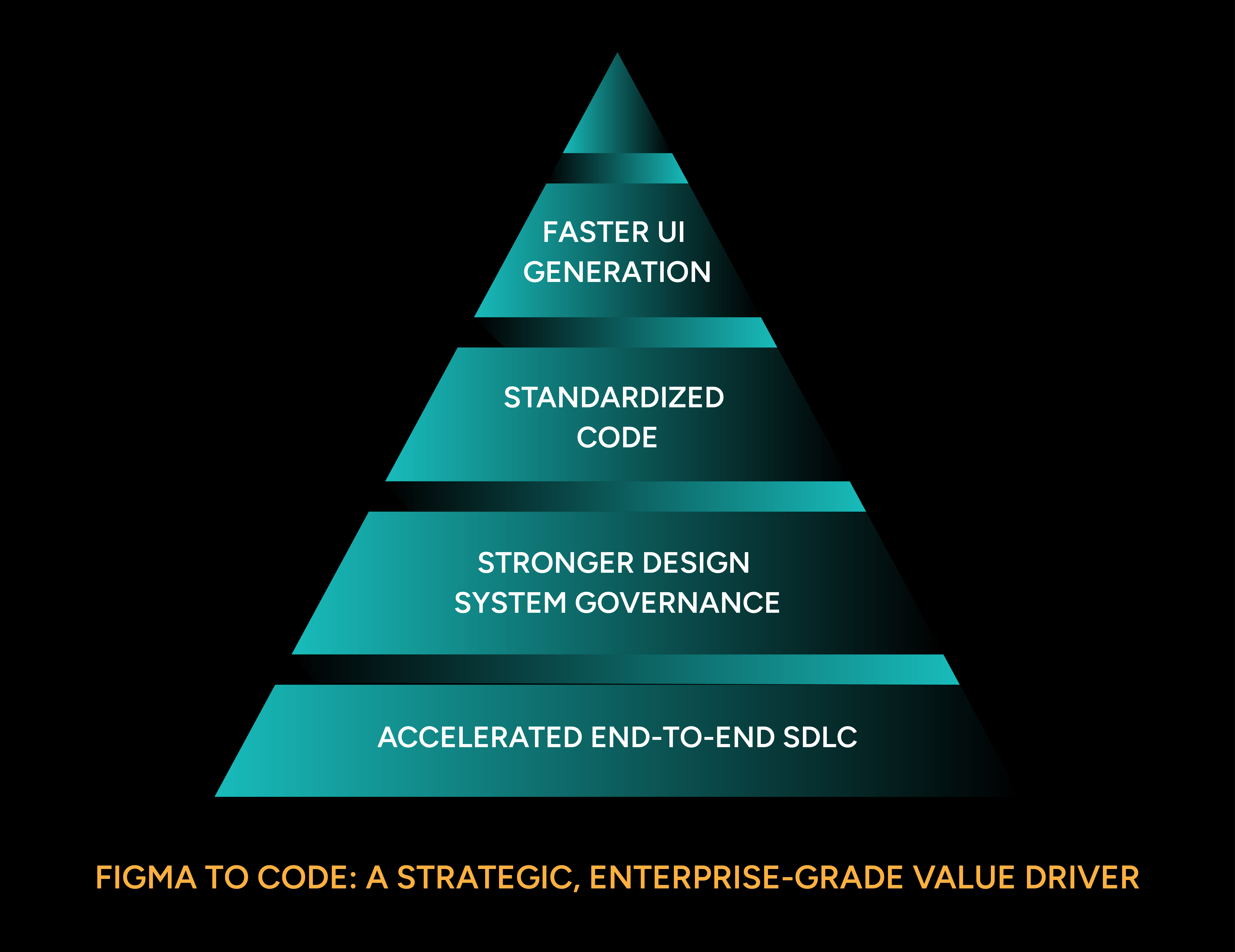
CodeSpell is the first AI platform that supports the entire SDLC from design to code, backend automation, API scaffolding, testing support, DevOps readiness, and deployment workflows. Its Figma to Code feature fits into this end to end strategy by giving enterprises:
For senior engineering leaders, CodeSpell creates a unified delivery framework that accelerates engineering capacity and streamlines digital product development at scale.
In 2026, teams that adopt CodeSpell’s Figma to Code capability deliver faster, stay more consistent, and build modern interfaces with significantly less effort. It is a competitive advantage for enterprises that want to execute software delivery at scale.
CodeSpell gives you a set of features that help speed up development, simplify workflows, and produce high-quality code. These AI-powered tools handle repetitive work, improve code, and help your development team stay productive.
These capabilities help your team focus on important work that creates value. They also help you improve delivery speed and maintain strong code quality across the development lifecycle.
CodeSpell’s Figma to Code using AI brings a major shift for modern development teams. It converts designs into pre-built production ready code automatically. This speeds up workflows, improves consistency, and gives you more time to focus on work that creates real value.
This AI powered solution removes the usual delays that happen during design handoff. It keeps the user interface consistent across teams. It also helps design, engineering, and product teams work together with ease.
CodeSpell also helps you plan release timelines with more confidence. It improves code quality across projects. Many enterprises rely on CodeSpell to simplify development processes and stay competitive in 2026. Choose CodeSpell and deliver frontend experiences faster and with greater efficiency.



July 1, 2026
Don’t Miss Out
We share cool stuff about coding, AI, and making dev life easier.
Hop on the list - we’ll keep it chill.

© 2026, SoftSpell. All Rights Reserved


