Agentic AI code generation tools improve developer productivity by automating repetitive coding tasks.
CodeSpell stands out for its seamless integration with your existing SDLC, enhancing code quality and speed.
Key factors for choosing the right tool: scalability, workflow integration, and code quality.
These tools help reduce errors, maintain consistency, and accelerate project timelines.
CodeSpell provides AI-driven solutions to accelerate, streamline, and standardize code generation across teams.
AI Software development is moving faster than ever, and manual coding is quietly becoming the bottleneck nobody can afford to ignore.
Repetitive code, inconsistent code reviews, slow handoffs between design and development—does this sound familiar?
These aren't minor inconveniences. They're productivity killers, eating into your sprint velocity and release timelines.
That's precisely where agentic AI code generation tools change the game.
Unlike basic autocomplete, these tools plan, reason, and autonomously execute multi-step development workflows, acting less like a suggestion engine and more like a tireless, context-aware collaborator.
GitHub's 2024 survey found that developers using AI coding tools completed tasks up to 55% faster.
So, which tools actually deliver?
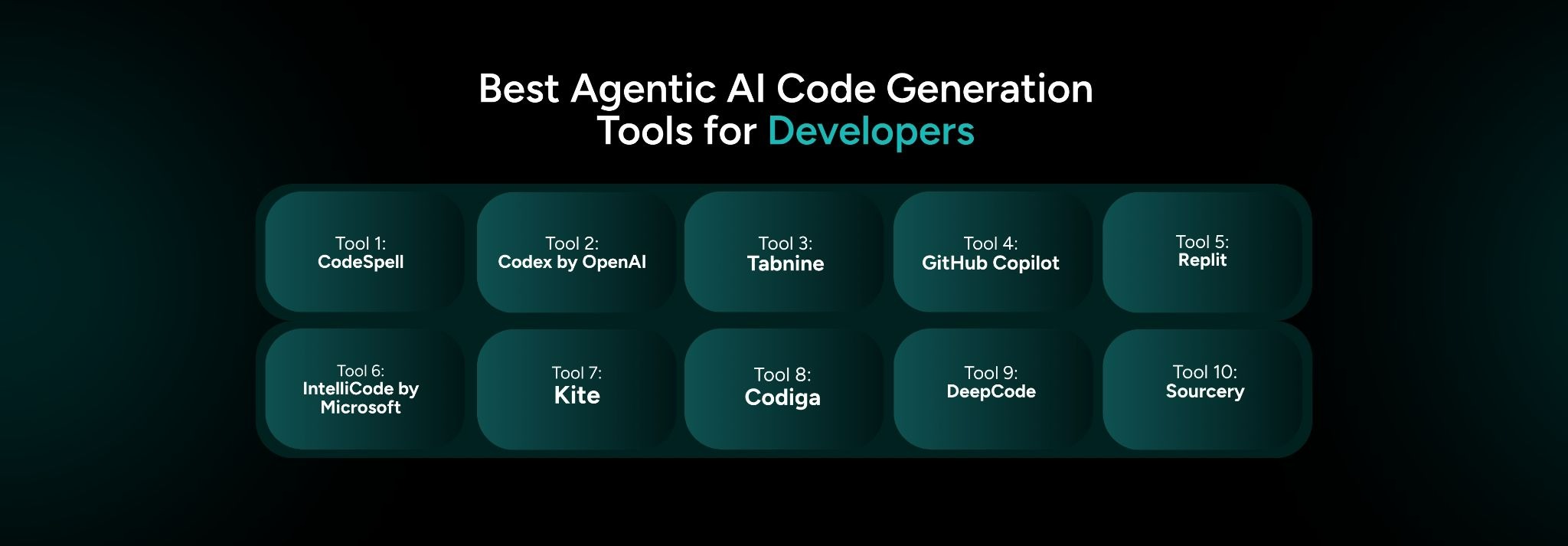
In this blog, we cut through the noise and break down the 10 best agentic AI code generation tools reshaping how engineering teams build in 2026.
Comparison table of 10 Best Agentic AI Code Generation Tools for Developers
Tool
Key Features
Languages Supported
Integration
Ideal For
Main Benefit
CodeSpell
IDE integration, design-to-code automation
Multiple (supports backend & frontend)
VS Code, JetBrains, GitHub
Startups, Enterprises, Dev Teams
Scalability, enhanced productivity
Codex by OpenAI
Natural language to code, full-stack support
Multiple (front-end & back-end)
VS Code, JetBrains
Startups, Small Teams
Versatility, fast prototyping
Tabnine
AI-driven code completion
Popular languages (Python, JS, etc.)
VS Code, JetBrains, Sublime Text
Agile teams, Developers
Code consistency, error reduction
GitHub Copilot
Contextual code generation, GPT-3-powered
Multiple (full-stack)
GitHub, VS Code
GitHub users, Agile teams
Faster code writing, best practices
Replit
Cloud-based collaborative coding
Multiple (front-end & back-end)
Cloud platform
Remote teams, Rapid prototyping
Collaboration, multi-language support
IntelliCode
IntelliSense with AI, code suggestions
C#, Python, JavaScript, TypeScript
VS Code, Visual Studio
Enterprises, Teams using Microsoft tools
Productivity, code suggestions
Kite
Code completion, documentation AI
Python, JavaScript, Go, etc.
VS Code, Sublime, JetBrains
Solo developers, Small teams
Efficient coding, machine learning support
Codiga
Automates repetitive tasks and code snippets
Multiple (supports backend & frontend)
VS Code, GitHub, GitLab
DevOps teams, Agile teams
Task automation, workflow optimization
DeepCode
AI-powered code analysis, bug detection
Multiple (Python, Java, JS, etc.)
GitHub, Bitbucket, GitLab
Security-focused teams, Large projects
Bug-free code, security optimization
Sourcery
Python code refactoring, real-time suggestions
Python
VS Code, JetBrains, Sublime Text
Python-focused teams, Dev teams
Code quality, readability
What are the 10 Best Agentic AI Code Generation Tools for Developers in 2026?
As the demand for faster, more efficient development cycles intensifies, agentic AI tools have become an essential part of the modern developer’s toolkit. These AI-powered solutions automate everything from code generation to debugging, ultimately enhancing productivity, improving code quality, and accelerating time-to-market.
Here are the top 10 AI code-generation tools for 2026, each designed to make coding easier, more scalable, and more efficient.
1. CodeSpell by SoftSpell
When it comes to end-to-end SDLC automation, CodeSpell stands in a league of its own by seamlessly connecting requirements, design, and deployment workflows. While most code assistants focus on generating snippets, CodeSpell unifies the entire development process, giving it a unique edge.
Key Features:
Figma to Production-Ready Code (Design Studio): Convert Figma designs directly into clean, structured React, Angular, or React Native code. Developers can select specific components, choose their styling framework, and export a fully scaffolded frontend all in minutes, with no manual translation needed.
Accelerated API Development: Jumpstart backend projects by auto-generating a standards-compliant codebase and project scaffolding straight inside your IDE. Tech stack selection, tool configuration, and repetitive setup tasks are handled automatically, freeing teams to focus entirely on business logic.
Automated API Test Script Generation: Generate comprehensive API test scripts from OpenAPI specs, Swagger documentation, or plain-English instructions. Every output comes with built-in logging, reporting, and maintainability, ensuring APIs are deployment-ready with minimal manual effort.
Infrastructure-as-Code (Terraform): Design and configure cloud resources, servers, databases, and more directly within your IDE. CodeSpell automatically generates Terraformscripts, ensuring consistent, repeatable infrastructure setups across all environments.
Real-Time Code Suggestions & Intelligent Completion: Context-aware, AI-powered suggestions help developers write cleaner, more consistent code as they type, reducing errors and boosting daily productivity without breaking existing flow.
Automated Code Documentation: Comprehensive, readable documentation is generated automatically alongside the code, keeping projects maintainable and accessible to all team members without extra effort.
Native IDE Integration: Works seamlessly inside VS Code, Eclipse, and IntelliJ; no workflow disruption, no new tools to learn. Real-time collaboration on designs, with differential code generation for smooth iterative updates.
Why Developers Love It: CodeSpell dramatically cuts coding effort, enforces coding standards automatically, and scales across large, distributed teams without breaking existing workflows. For organizations modernizing legacy systems or operating in fast-moving, agile cycles, it's a force multiplier.
2. Codex by OpenAI
Codex powers much of the AI coding revolution. It converts plain-English prompts into functional code across dozens of languages and frameworks, making it useful for startups and small teams that need to move quickly without a large engineering staff.
Key Features:
Translates natural language into working code instantly
Supports Python, JavaScript, TypeScript, Go, Ruby, and more
Integrates with IDEs and assists in full-stack development
Powers GitHub Copilot under the hood
Best For: Startups and small development teams looking to prototype quickly and reduce time-to-first-build.
3. Tabnine
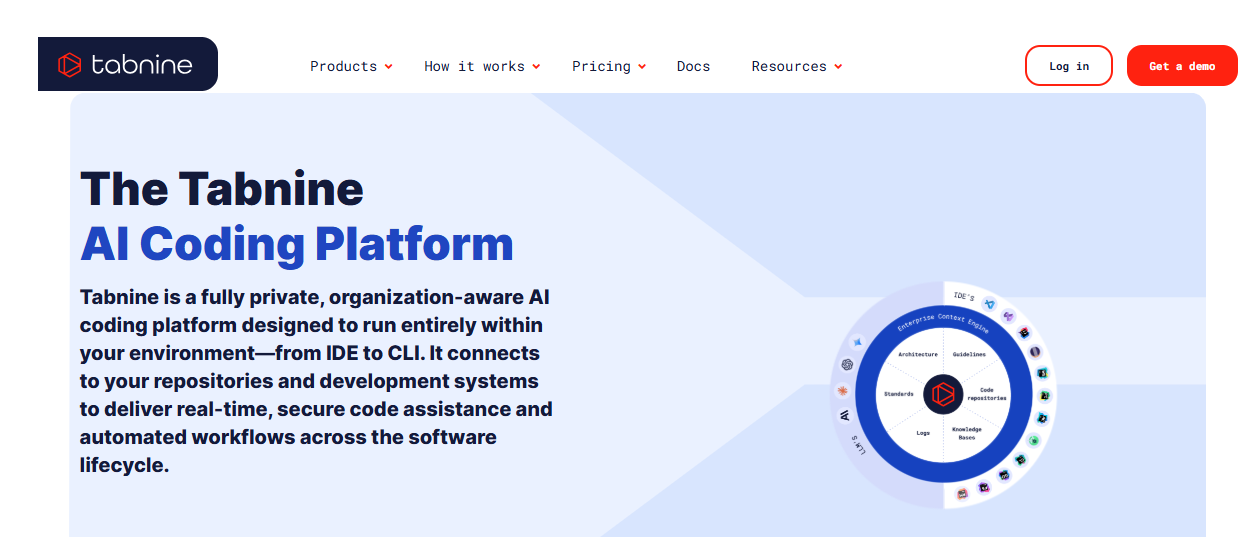
Tabnine uses a privacy-first approach to AI code completion, differentiating it for enterprise teams with sensitive codebases. It can learn from private repositories to give highly contextual suggestions.
Key Features:
AI-driven code completion trained on your own codebase
Supports 30+ programming languages
Deep integration with VS Code, JetBrains, and other popular IDEs
Enforces code consistency across teams
Best For: Enterprise teams prioritizing data privacy alongside developer productivity.
4. GitHub Copilot
GitHub Copilot is one of the most widely used AI coding assistants. Powered by OpenAI, it lives in your IDE and generates relevant code suggestions as you type, reducing routine coding time.
Key Features:
Auto-generates code snippets, functions, and entire modules from context
Powered by OpenAI's advanced language models
Offers real-time recommendations and bug fix suggestions
Seamlessly integrates with GitHub repositories.
Best For: Development teams already embedded in the GitHub ecosystem looking for an always-on coding companion.
5. Replit
Replit reimagines development. As a cloud-based, collaborative environment, it removes local setup friction, making it ideal for remote teams, educators, and developers who need rapid prototyping and iteration.
Key Features:
Fully cloud-based with real-time collaboration built in
AI-assisted code generation based on user prompts
Supports 50+ programming languages
Zero-setup environment, run code instantly in the browser.
Best For: Remote teams, rapid prototyping, and developers who value speed over configuration.
6. IntelliCode by Microsoft
IntelliCode brings AI intelligence directly into Visual Studio. It analyzes your codebase to surface recommendations aligned with your team's coding patterns and best practices.
Key Features:
AI-enhanced IntelliSense with context-aware suggestions
Learns from your team's codebase to recommend relevant completions
Focuses on enforcing best practices and reducing inconsistencies
Integrates natively with Visual Studio and VS Code
Best For: Microsoft-stack development teams looking to improve code consistency without disrupting existing workflows.
7. Cursor
Cursor is an AI-powered coding assistant designed to enhance developer productivity by offering context-aware code generation, editing, and refactoring. It integrates seamlessly with IDEs, allowing developers to ask natural language questions about their code and receive instant, actionable results.
Perfect for teams working with large codebases, Cursor helps streamline knowledge discovery, optimize patterns, and accelerate collaboration across projects.
Key Features:
Context-aware AI that understands entire files or repositories, not just individual lines.
Semantic search & AI queries for natural language questions about your code, providing instant answers.
AI-driven code generation, editing, and refactoring to help produce, update, and improve code across multiple files.
Seamless integration with popular IDEs and workflows to enhance developer productivity.
Best For: Teams working with large codebases who need to navigate, refactor, and optimize code efficiently. Ideal for developers looking to speed up knowledge discovery and improve collaboration.
8. Codiga
Codiga focuses on what slows developers down most: repetitive tasks and inconsistent code patterns. Its smart code snippets and workflow automation features help teams standardize their coding process across projects and environments.
Key Features:
Smart code snippet library to eliminate repetitive coding
Automates routine tasks and enforces coding rules
Integrates with IDEs and cloud-based development environments
Customizable ruleset to match your team's standards
Best For: Development teams and agencies managing multiple projects who need consistent, reusable code standards.
9. DeepCode (now Snyk Code)
DeepCode, now Snyk Code, goes beyond generation, focusing on post-generation, keeping code secure and bug-free. Trained on millions of open-source repositories, it identifies vulnerabilities and suggests real-time fixes.
Key Features:
AI-powered static code analysis for bug and security detection
Real-time suggestions for vulnerability remediation
Supports JavaScript, Python, Java, TypeScript, and more
Integrates directly into CI/CD pipelines
Best For: Security-conscious engineering teams that need continuous code quality and vulnerability monitoring baked into their workflow.
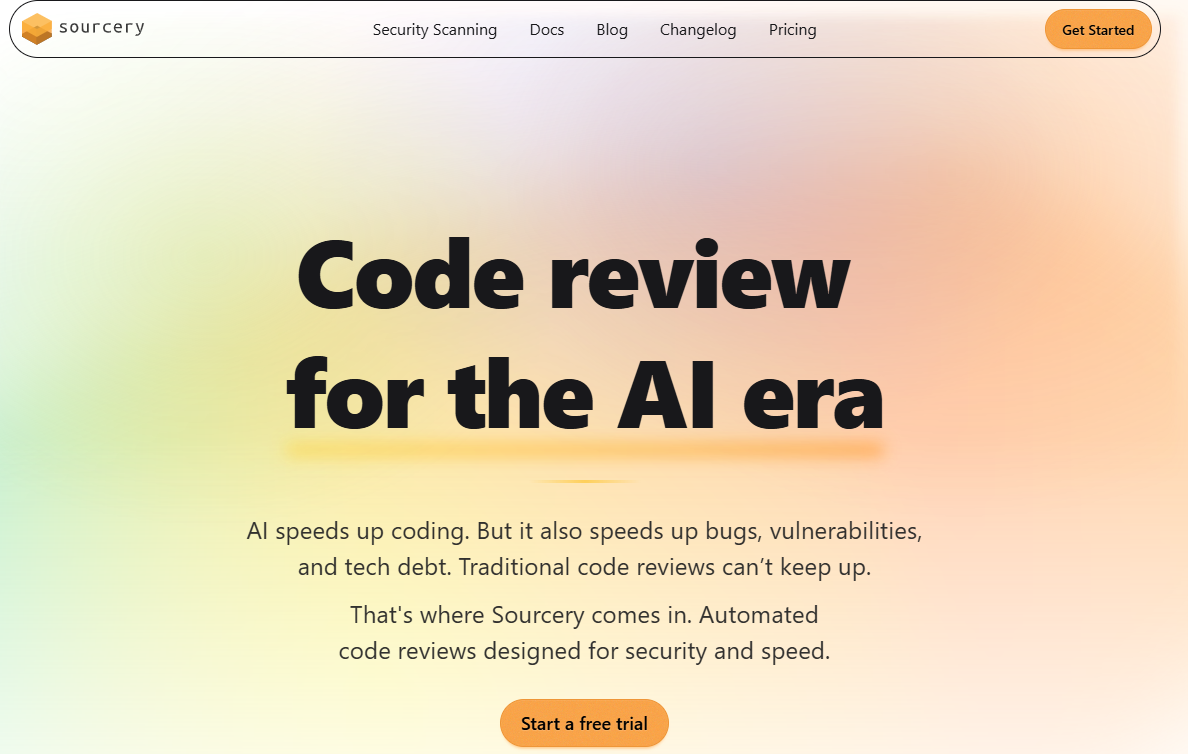
10. Sourcery
Sourcery focuses on code quality for Python teams. Instead of generating new code, Sourcery analyzes your codebase and provides actionable refactoring suggestions to improve readability, performance, and maintainability.
Key Features:
Real-time Python code refactoring and improvement suggestions
Focuses on readability, simplicity, and reducing technical debt
Integrates with VS Code, PyCharm, and GitHub
Automated pull request reviews with quality suggestions
Best For: Python-focused development teams serious about maintaining high code quality and reducing long-term technical debt.
How to Choose the Right Agentic AI Code Generation Tool for Your Team?
When selecting an agentic AI code generation tool, consider these key factors to ensure it aligns with your team’s needs:
Scalability: Ensure the tool can handle growing projects and increasing codebase complexity, especially for enterprise-level teams.
Security and Compliance: Enterprise teams must prioritize data privacy and compliance. Choose tools with private model training, SOC 2 compliance, and code governance controls.
Seamless IDE Integration: Choose a tool that integrates easily with your existing IDEs (e.g., VS Code, JetBrains) to reduce friction and boost developer productivity.
CI/CD Pipeline Compatibility: The tool should integrate smoothly into your CI/CD pipelines, enabling automated testing, deployment, and continuous delivery.
Team Collaboration: The tool should support collaboration features, including role-based access and integration with version control systems such as GitHub.
Closing Thoughts
Agentic AI code generation tools are no longer a competitive advantage; they’re quickly becoming standard for high-performing engineering teams.
From automating repetitive coding tasks to maintaining consistency across large codebases, the right tool doesn't just save time; it fundamentally changes how your team builds software.
Most tools solve only part of the problem. If you want a solution that connects requirements, code generation, testing, and deployment into a single intelligent workflow, SoftSpell's CodeSpell is designed for that.
Whether scaling a growing engineering team, modernizing a legacy codebase, or shipping faster without losing quality, CodeSpell shows what's possible.
Explore CodeSpell or Book a Free Demo and see how we can transform your development lifecycle from day one.
Agentic AI code generation refers to AI-powered tools that automate the process of writing code, translating designs into executable code with minimal human intervention. These tools help developers save time, reduce errors, and improve productivity by automating repetitive tasks.
2. How does AI-powered code generation improve developer productivity?
AI-powered tools automate repetitive coding tasks, suggest code improvements, and ensure consistency across large codebases, allowing developers to focus on more complex and creative aspects of their projects. This results in faster development cycles and fewer bugs.
3. What are the benefits of using CodeSpell for AI code generation?
CodeSpell offers seamless integration with popular IDEs, supports multiple programming languages, and provides automated design-to-code conversion. It helps teams generate clean, maintainable code faster, enhancing scalability and improving code quality.
4. Can AI code generation tools integrate with existing workflows?
Yes, most AI-powered code generation tools, including CodeSpell, integrate smoothly with common workflows, IDEs, and CI/CD pipelines, helping developers streamline their processes without disrupting existing setups.
5. Which AI code generation tool is best for my team?
The right tool depends on your team’s needs. If you’re looking for seamless integration, scalability, and high-quality code, CodeSpell is a strong contender. Consider tools like Tabnine or GitHub Copilot for code completion or DeepCode for code analysis, depending on your requirements.


.svg)