


Changelog
July 1, 2026
.svg)
.png)
Most engineering leaders still evaluate AI tools based only on individual developer productivity. This approach uses the wrong metric. When you optimize only at the individual level, you miss the bigger picture.
When teams ignore this shift, a delivery gap starts to grow. This gap increases every quarter. Within 6 to 12 months, you notice the impact in release cycles, technical debt, and headcount efficiency that becomes hard to fix.
This post ranks the AI Copilot for coding platforms. It focuses on what truly matters at scale. It looks at governance, lifecycle coverage, and consistency across teams. You will also gain a clear decision framework to choose the right Copilot AI coding environment before competitors move ahead with the tools they already use.
Enterprises face relentless pressure: faster delivery cycles, multi-language complexity, tighter compliance, and rising costs. Traditional IDEs can’t meet these demands alone.
This is why AI coding Assistance are the new baseline for competitive engineering teams. The real question for CTOs and CIOs isn’t should we adopt AI? it’s which AI Coding Assistant gives us the strongest edge in delivery and quality?
1: Codespell - The AI SDLC Co-Pilot
Codespell stands apart by embedding an AI copilot directly inside enterprise IDEs supporting VS Code, IntelliJ, and Eclipse. It goes beyond coding assistance with a full suite of enterprise-ready capabilities:
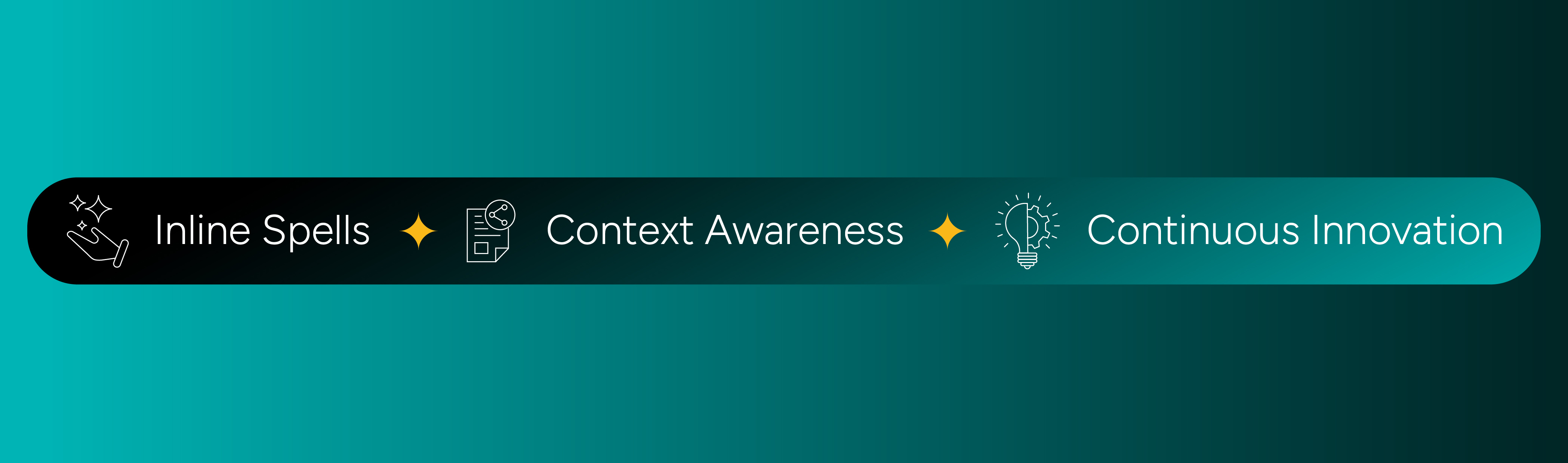
By combining Reqspell (requirement-to-code), Testspell (test automation), and Design-to-Code, Codespell transforms the IDE into a true AI software development platform.
2: Codeium
Codeium has emerged as a strong competitor in the ai coding ide space, offering autocomplete, chat, and code search. It’s fast, accessible, and cost-efficient, making it appealing for growing teams. Yet, it doesn’t embed enterprise-grade controls or extend deeply into requirement gathering or test automation.
3: GitHub Copilot
As one of the most widely adopted AI coding tools, GitHub Copilot provides intelligent autocompletion, inline suggestions, and natural-language prompts. It integrates seamlessly with VS Code and is great for individual productivity. However, enterprises often face challenges around governance, data privacy, and cross-team consistency.
4: Tabnine
Tabnine is a popular AI code helper known for its strong autocomplete and privacy-first approach, including on-premise deployment options. While powerful for individual developers, it focuses heavily on completions and lacks broader lifecycle automation, making it less suited for large, multi-role enterprise teams.
5: Amazon Q
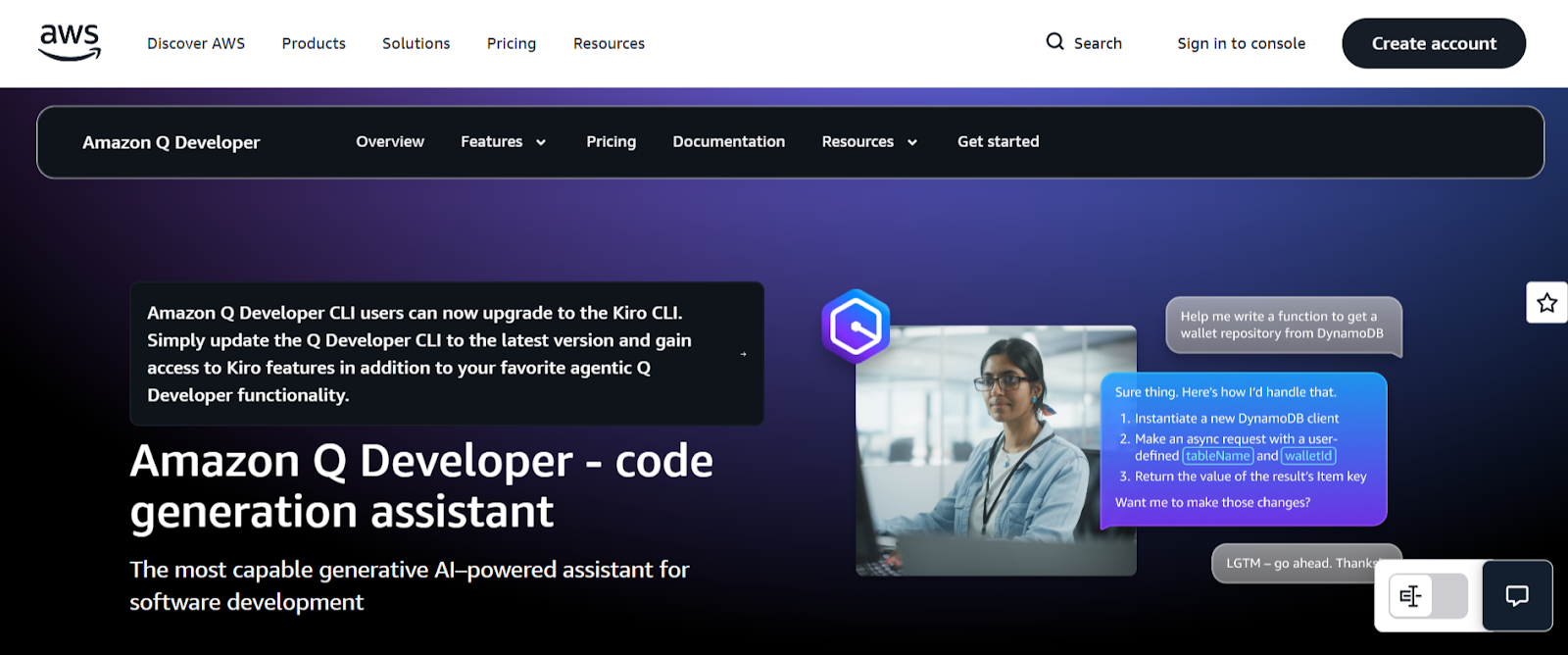
Amazon’s AI software development assistant is designed for teams building on AWS. It excels at generating cloud-ready code and answering natural-language queries about AWS services. However, it remains tightly tied to the AWS ecosystem, which limits its value for enterprises working across multiple platforms.
For leaders managing hundreds or thousands of developers, the stakes are higher:
This ranking demonstrates an important truth, many improve individual developer productivity, but very few address the full spectrum of enterprise needs.
The landscape is clear:
For enterprises that care about velocity, consistency, and compliance at scale, Codespell gives you the competitive edge.
The best AI copilot for coding isn't the one with the most features. It's the one your team will actually use consistently, at scale, without creating new governance headaches.
Start by asking three questions:
Run a structured 30-day pilot. Don't measure how developers feel about the tool. Measure cycle time, code review turnaround, and test coverage delta.
The right copilot for coding should reduce friction across the entire delivery lifecycle — not just autocomplete faster.
The tools your developers use every day are no longer just productivity boosters. They are strategic differentiators in how fast and how well your organization ships software.
With Codespell, enterprises can turn VS Code, IntelliJ, and Eclipse into environments that:
While other AI IDEs deliver productivity gains, Codespell delivers enterprise transformation. It ensures developers move faster without sacrificing quality, and leaders can trust that outputs meet organizational and compliance standards.



July 1, 2026
Don’t Miss Out
We share cool stuff about coding, AI, and making dev life easier.
Hop on the list - we’ll keep it chill.

© 2026, SoftSpell. All Rights Reserved


