


Changelog
July 1, 2026
.svg)
.png)
If you work in QA, you’ve likely seen testing slow everything down. What should be a smooth release cycle often gets delayed by disconnected tools and unclear visibility.
The issue is not testing itself but fragmented workflows across teams and systems. Test creation, execution, and reporting rarely connect in one place. This creates gaps in the overall QA pipeline and makes it harder to track quality in real time.
Testspell solves this gap by bringing everything together. It delivers clarity, coverage, and confidence in every release.
This article explains why QA fails at scale and how a connected testing approach fixes it.
In large organizations, QA often operates as a collection of tools and processes that never fully connect. One team writes test cases manually, another executes them in isolated environments, and a third compiles reports at the end of each sprint. Each step requires manual coordination and context switching.
These disconnected pipelines make it nearly impossible to maintain visibility across the entire testing process. Test data is scattered, test results are delayed, and teams waste valuable time trying to piece everything together. The result is slower delivery, delayed releases, and an overall lack of trust in the QA process.
Disconnected QA isn’t just inefficient, it erodes confidence in release quality and keeps teams reactive instead of forward-moving.
For enterprise leaders, the impact of fragmented QA pipelines shows up in multiple ways:
Even highly automated teams face this problem when their automation tools don’t talk to each other. Without end-to-end visibility, decision-making slows, and the cost of catching defects increases.
Testspell is AI-powered test automation for modern teams
It replaces fragmented QA workflows with a single connected platform that generates, runs, and analyzes tests in one flow.
Here’s how it transforms QA:
Testspell does not just automate tasks; it also integrates every aspect of quality engineering, ensuring testing evolves alongside development rather than trailing behind.
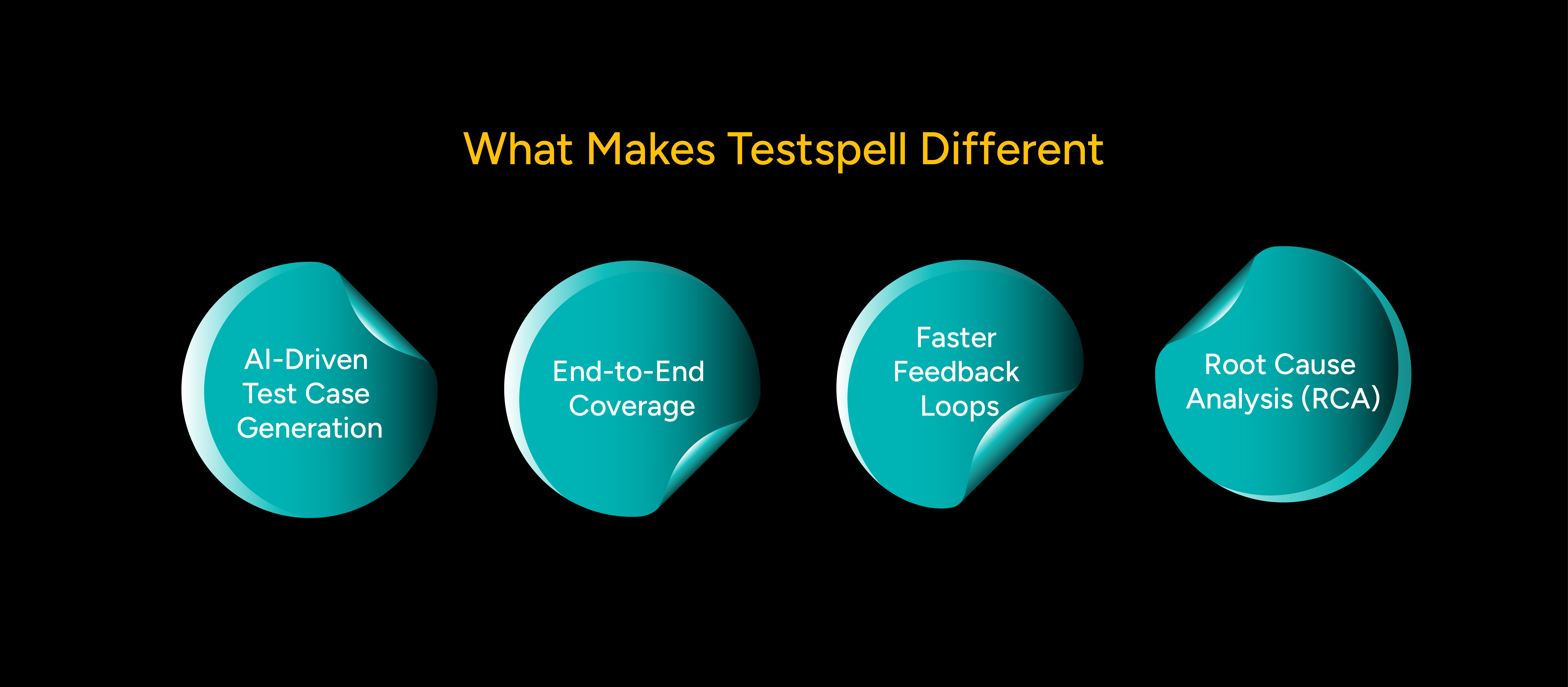
When QA functions as one unified system, teams spend less time managing tools and more time improving quality.
This connected approach aligns QA with enterprise speed enabling teams to deliver faster without compromising reliability or compliance.
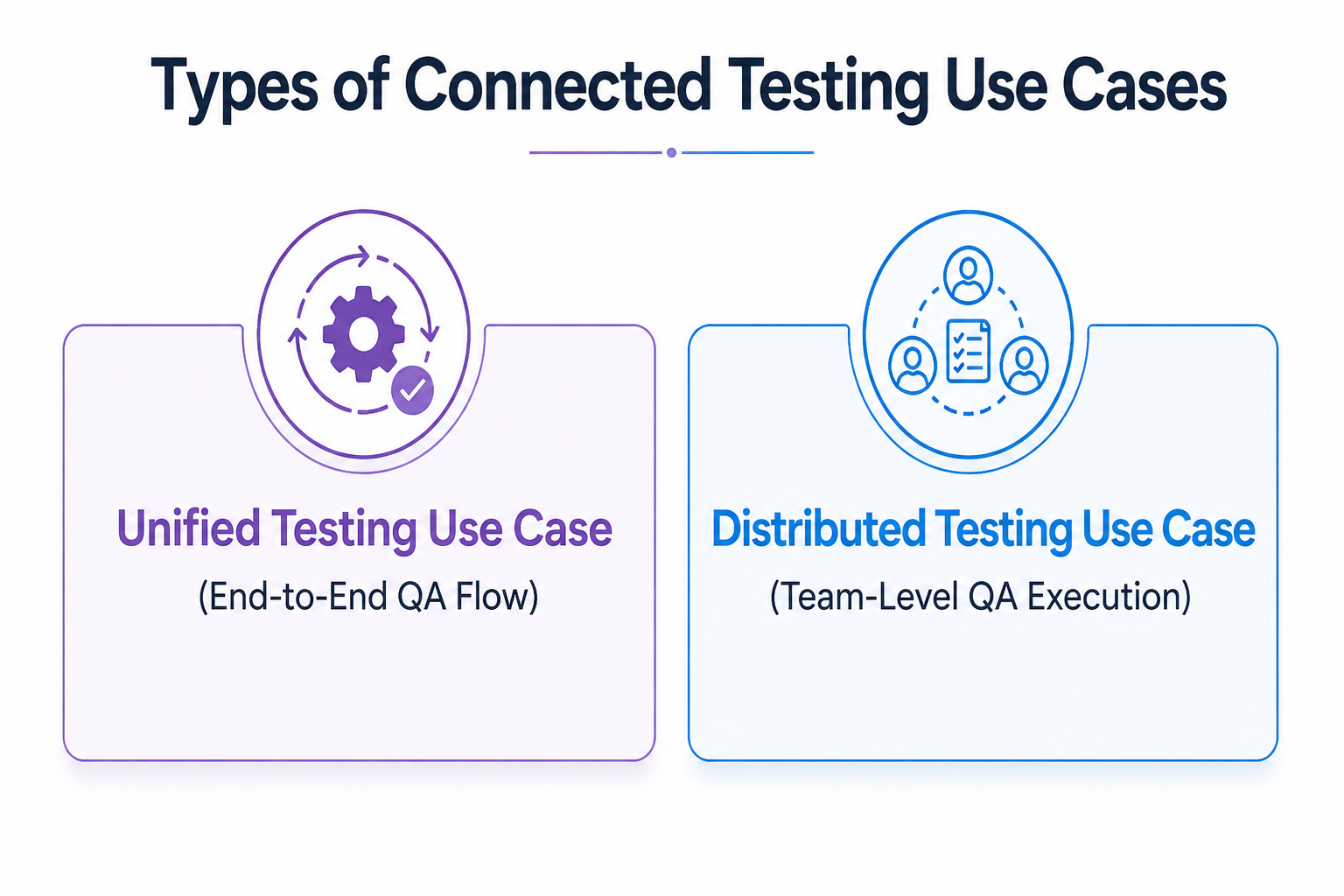
Connected testing in enterprise QA can be understood at two levels based on how deeply it integrates into the software delivery process:

This refers to a fully connected QA workflow where testing is treated as a continuous process across the SDLC. It focuses on ensuring that all testing activities such as API testing, UI testing, and regression testing are executed within a single coordinated system.
In this model, every change in the application triggers a connected validation flow. Test creation, execution, and reporting are unified, giving teams a single view of quality across environments.
This approach ensures:
This refers to testing scenarios where multiple teams work on different services but still need to maintain consistency in execution and reporting. It is commonly used in large enterprises where QA responsibilities are distributed across geographies or product teams.
Here, individual teams may own specific test suites, but execution and reporting are synchronized through a shared testing layer.
This approach ensures:
Testspell integrates directly into existing workflows, helping teams move faster without changing the way they work.
By replacing isolated testing tools with an integrated approach, TestSpell helps enterprises deliver with speed and assurance.
Most teams using multiple QA testing software tools face fragmentation across test creation, execution, and reporting, which leads to poor visibility and inconsistent quality outcomes.
Testspell changes that by connecting every part of the testing process. It gives teams a single source of truth for quality, ensures full coverage across platforms, and delivers insights that help prevent issues instead of reacting to them.
Integrated testing is no longer a nice-to-have. It is how enterprises move faster and deliver safer software at scale.
Stop managing disconnected testing. Start building with clarity, coverage, and control. Book a Demo with Testspell.



July 1, 2026
Don’t Miss Out
We share cool stuff about coding, AI, and making dev life easier.
Hop on the list - we’ll keep it chill.

© 2026, SoftSpell. All Rights Reserved


